
 Tiếng
Việt
Tiếng
Việt
 Tiếng
Anh
Tiếng
Anh
 Tiếng
Nhật
Tiếng
Nhật




 Tiếng Anh


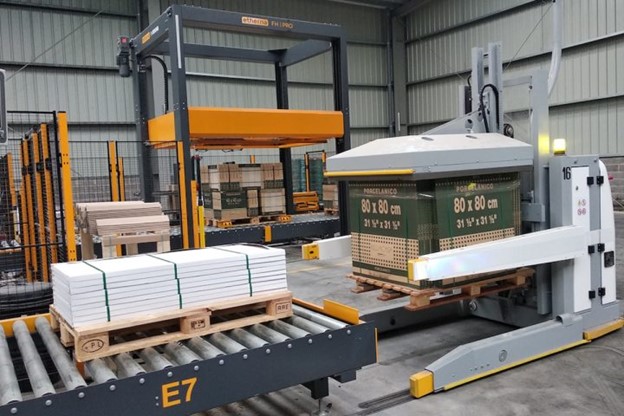
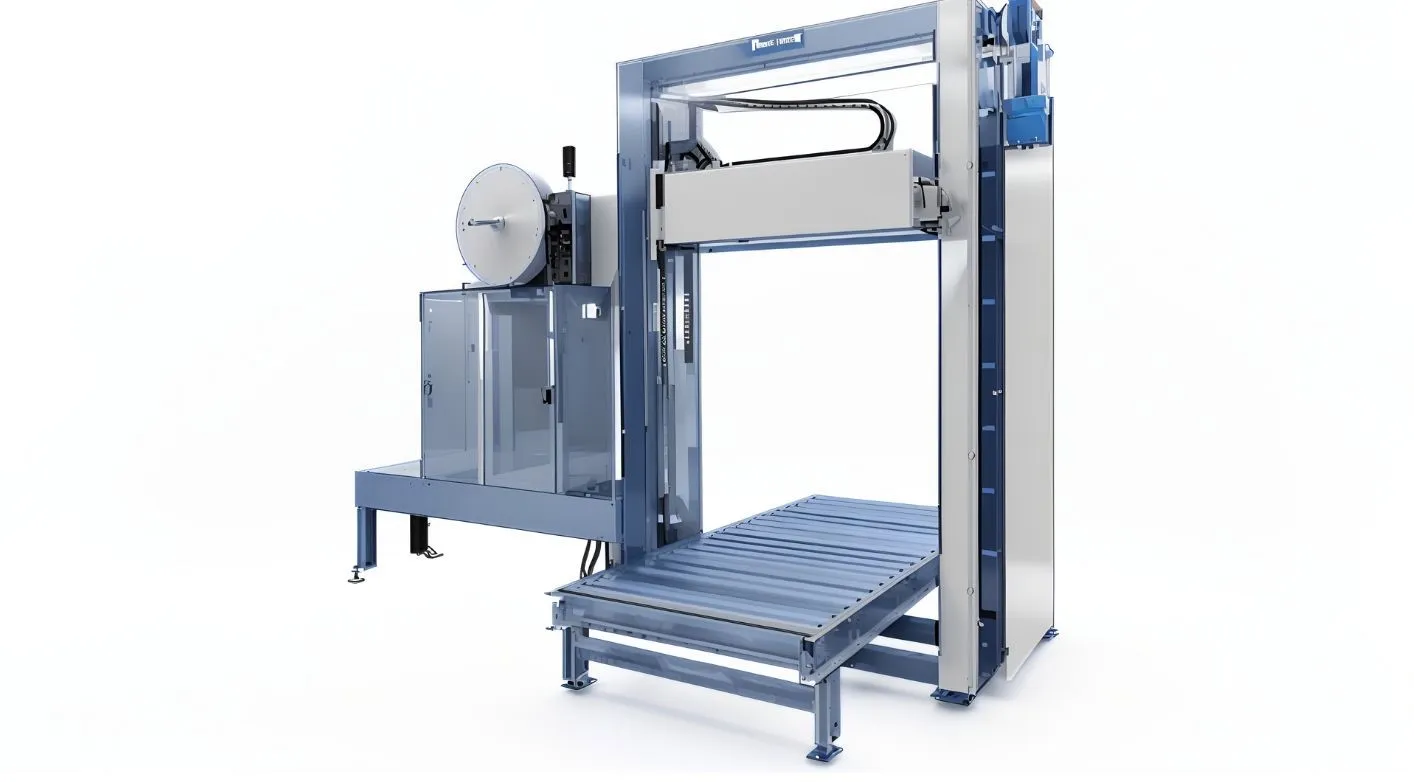
Pallet strapping machine
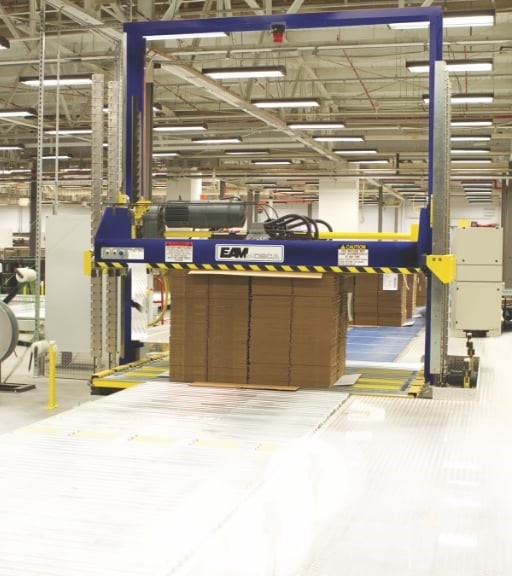
Pallet strapping machine is a device used to strap pallets or cartons of large size and volume, using the method of wrapping the strap around the product and heat welding to securely attach the end of the strap. , secure goods with pallets. Pallet strapping machine with high working speed helps increase packaging productivity, ensures product integrity, saves a significant amount of time and resources, is easy to get used to and use, and the price is not too high. suitable for financial capacity of small and medium enterprises.
VIETNAM CNC & TECHNOLOGY APPLICATION JOINT STOCK COMPANY
Hotline: +84.916 63 9355 / +84.915 74 4664
Email: Sales01@cncvina.com.vn / Sales03@cncvina.com.vn
Product description

Pallet strapping machine is designed to secure palletized loads or large and heavy cartons by wrapping a strap around the products and heat-sealing the strap ends to firmly secure the load to the pallet. With high strapping speed, the machine can process a large number of packages in a short period, delivering higher throughput compared with traditional handheld strapping tools. So, how does a pallet strapping machine help protect goods from shifting, falling, or being damaged during handling and transportation? In this article, let’s explore with CNC VINA the key functions and applications of pallet strapping machines, and how they can support businesses when investing in an automated packaging solution.
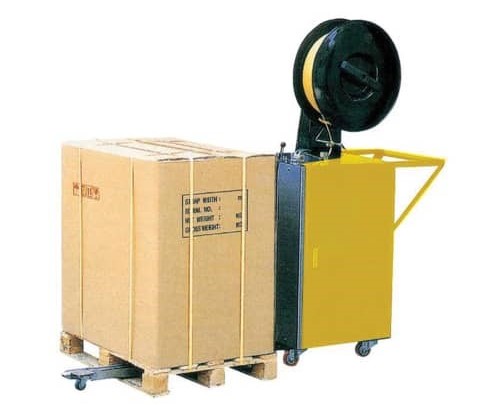
Currently, on the market there are mainly two types of pallet strapping machines: automatic and semi-automatic pallet strapping machines, provided by many suppliers with many designs and flexible working capabilities that allow strapping. Packages have different sizes.
Key features of pallet strapping machines
Automatic and semi-automatic operation
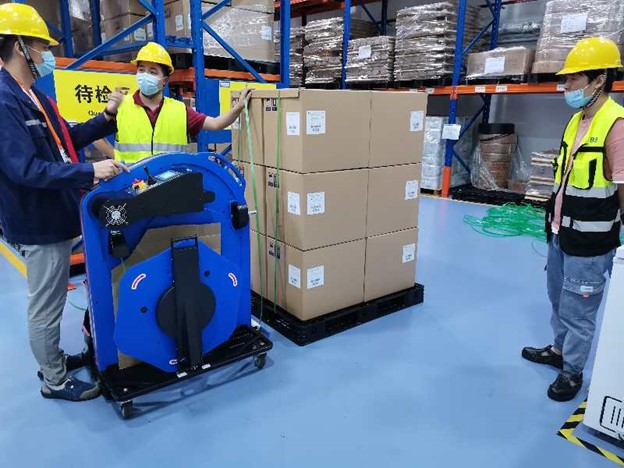
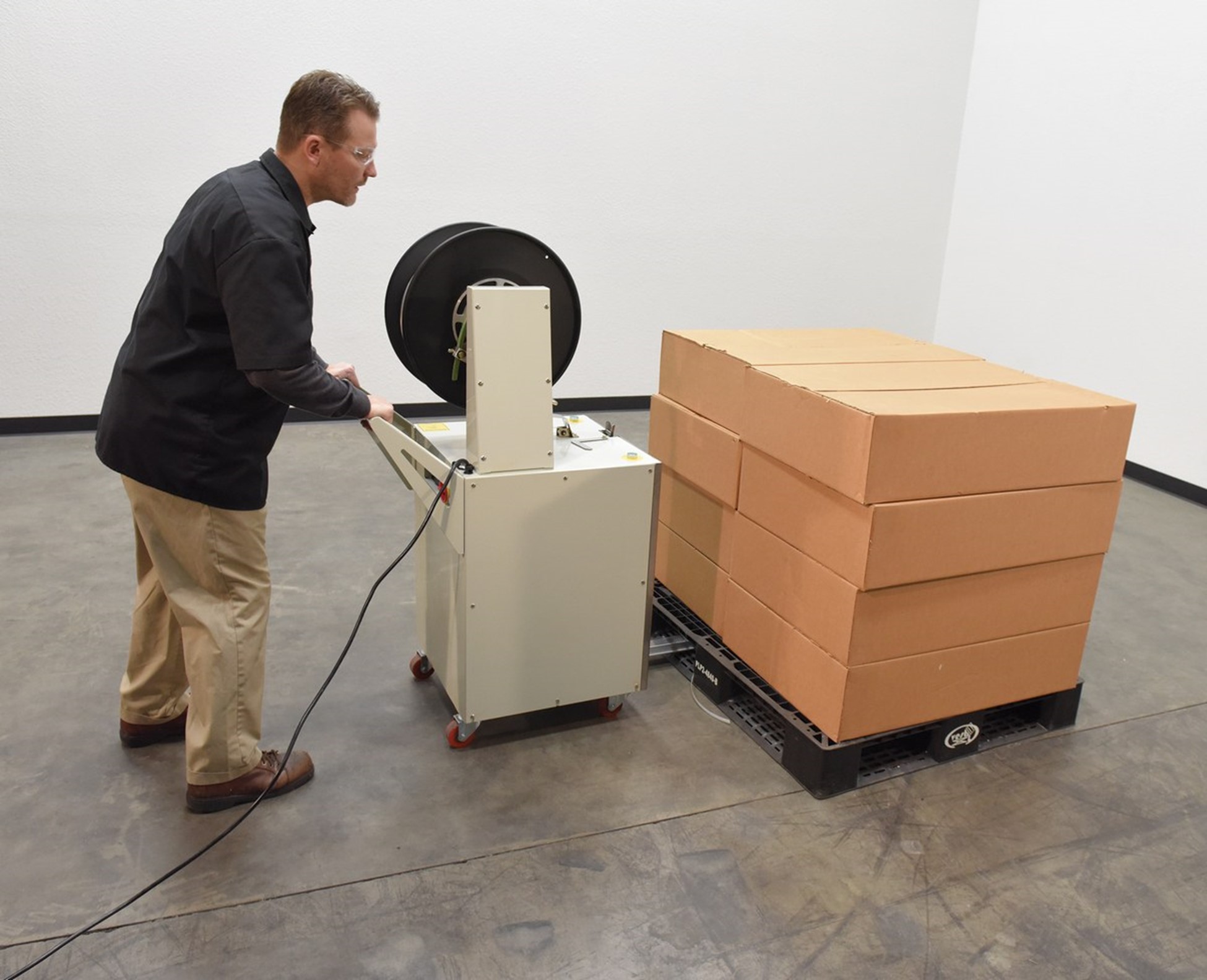
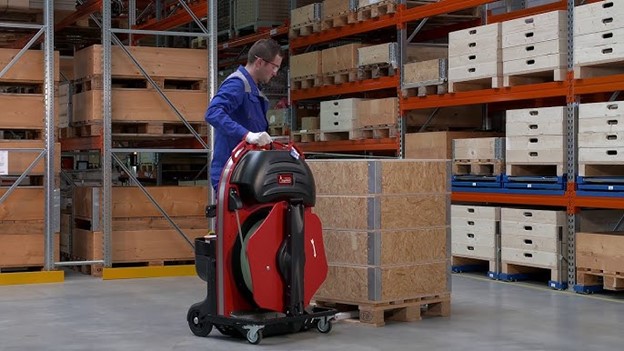
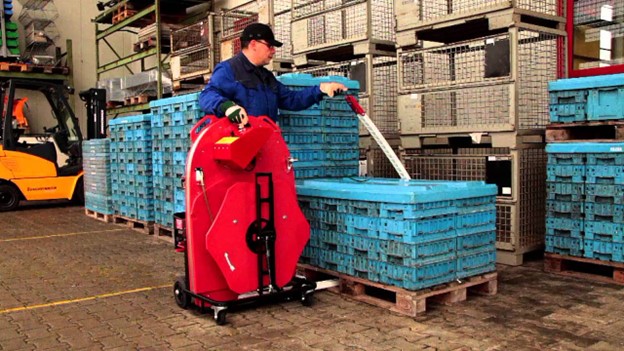
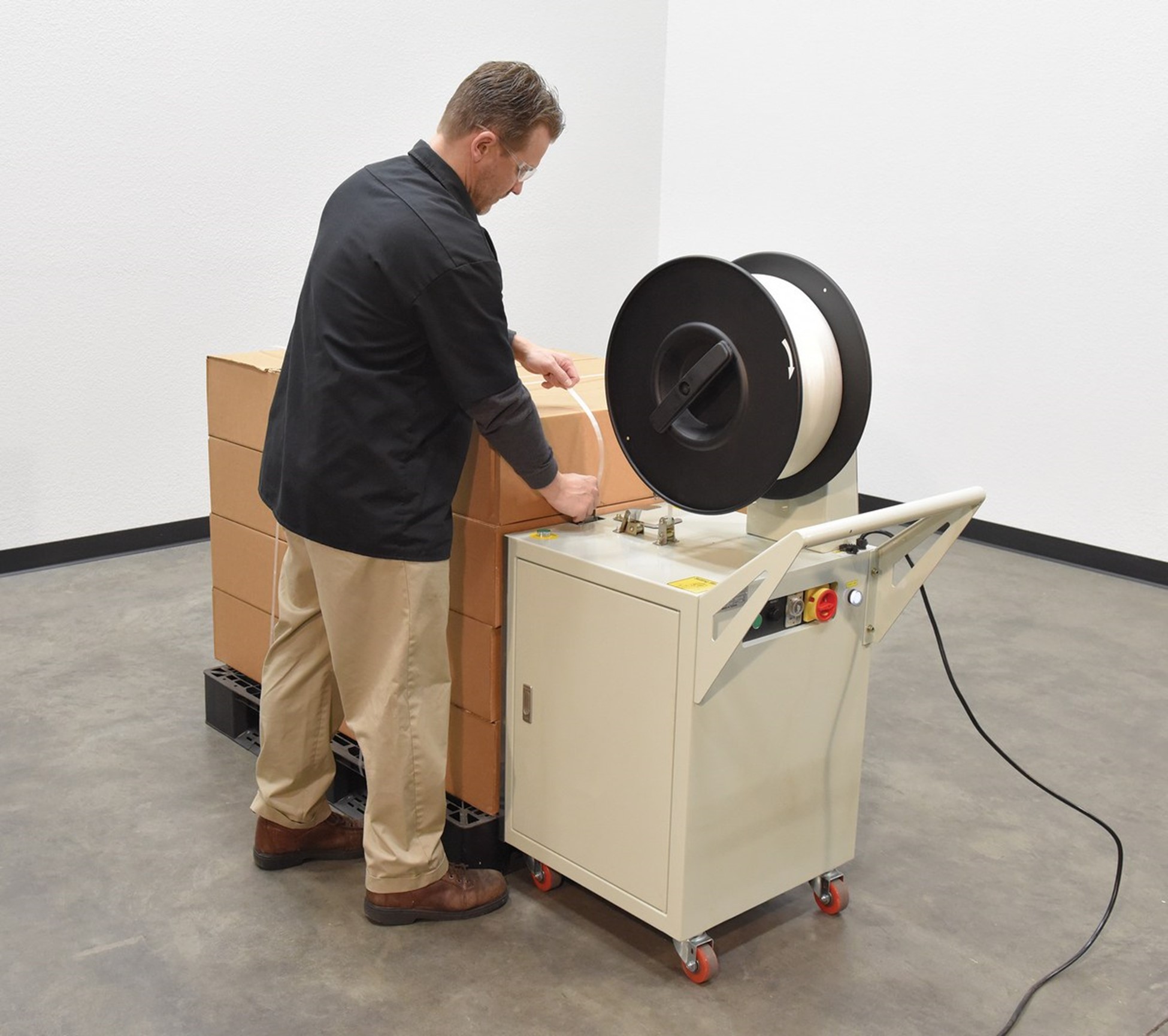
A semi-automatic pallet strapping machine requires an operator to assist with the strapping process. During pallet strapping, the strap guide feeds the strap through the narrow gaps beneath the pallet base. The operator then receives the strap end after it has been routed around the load and places it into the machine's tensioning unit for tensioning, heat sealing, and cutting. The operator can then repeat the strapping cycle to apply additional straps as required, helping ensure that the load is adequately secured for handling and transportation.
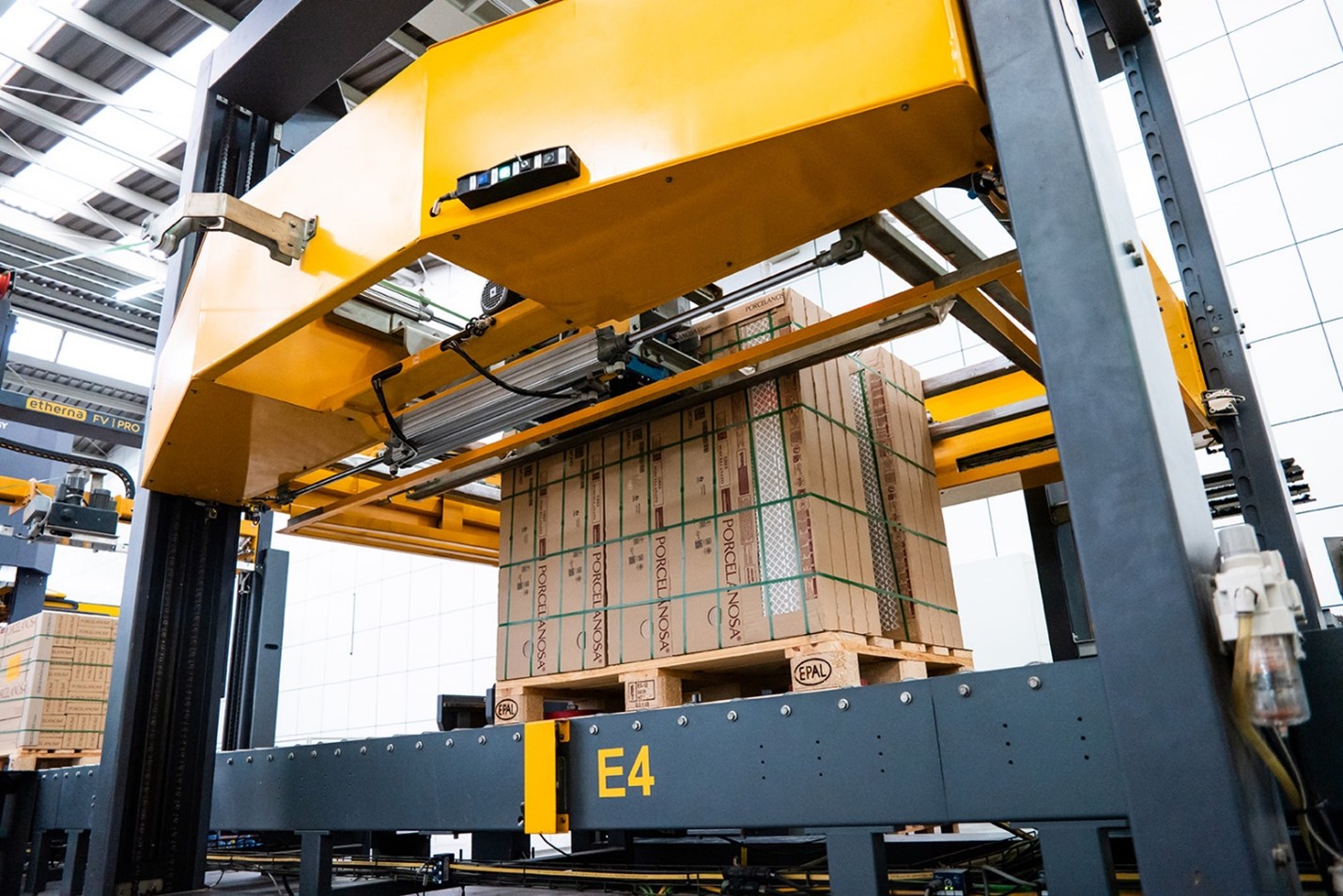
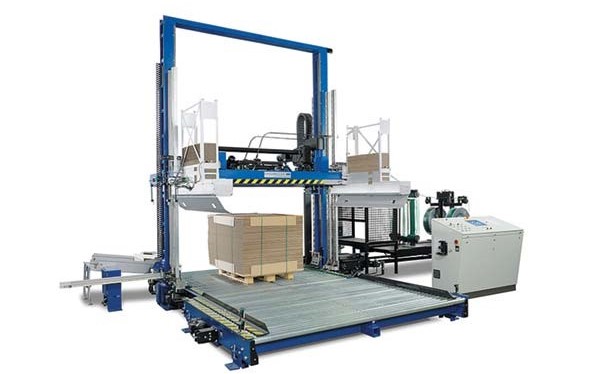
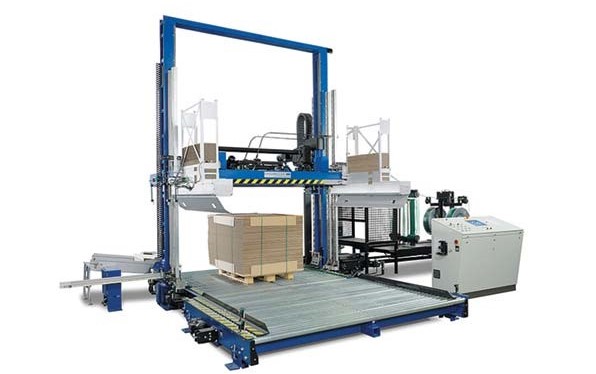
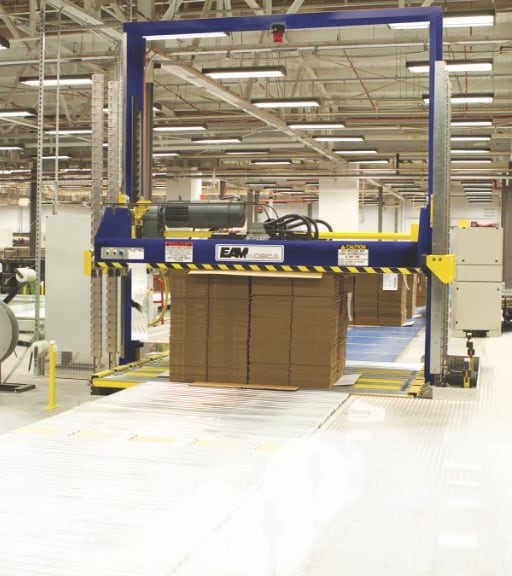
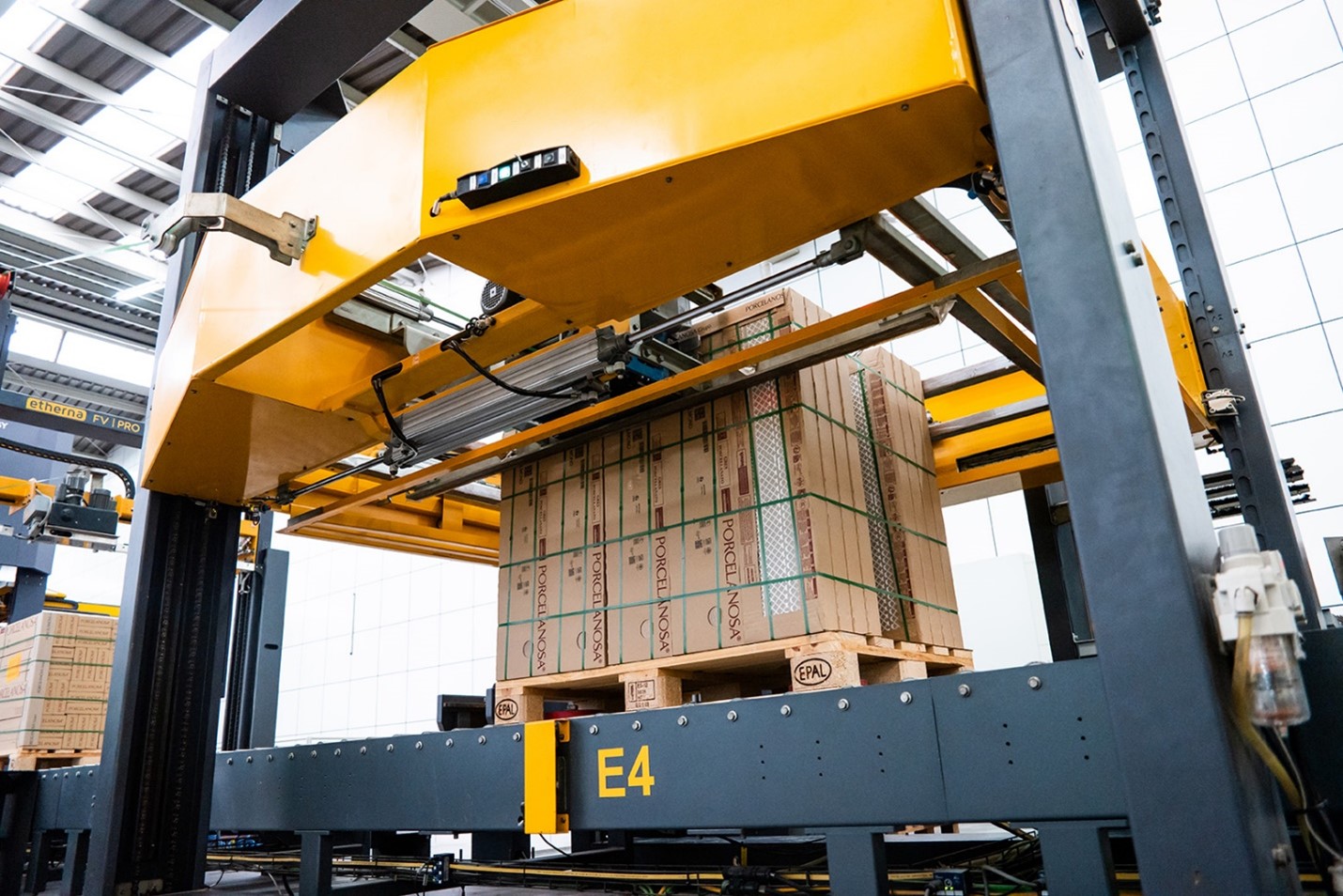
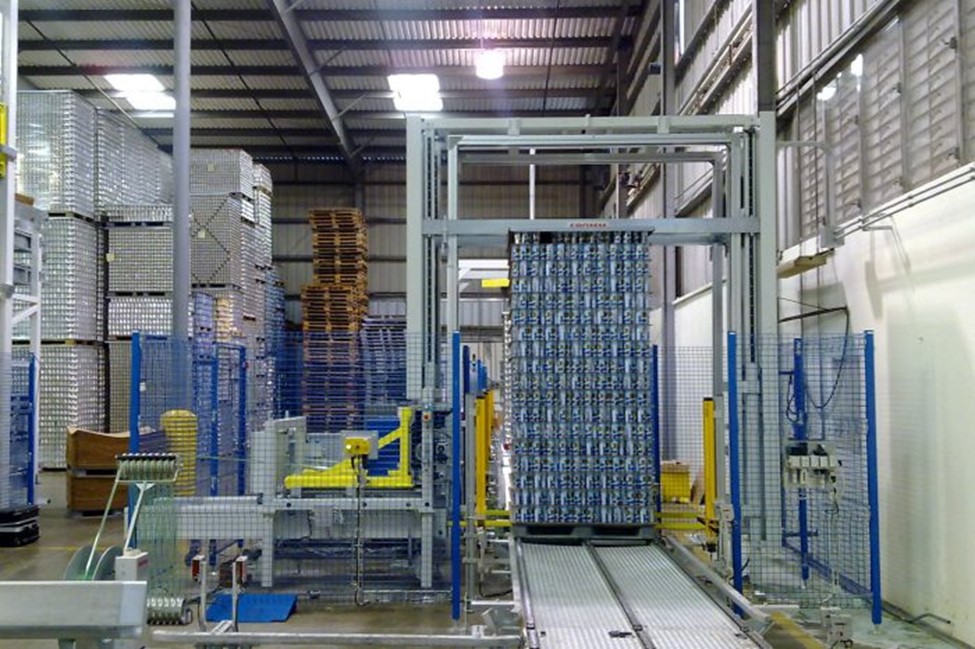
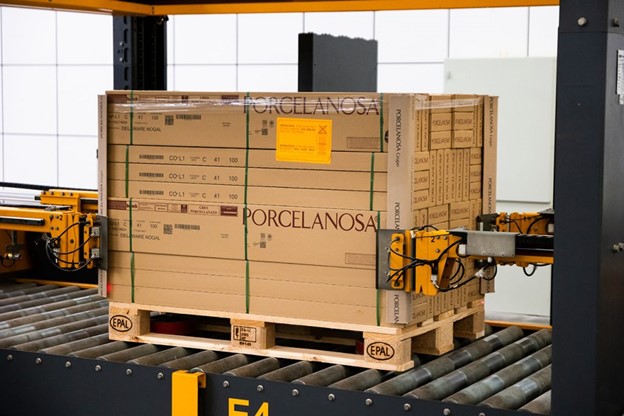
The automatic pallet strapping machine does not require strapping support staff. The machine is designed with a strapping frame that covers the entire package, integrated with a conveyor system and sensors, helping the process of importing and exporting packages, strapping, heat welding, and cutting the belt to take place completely automatically, allowing for high productivity. Strapping capacity is higher than semi-automatic pallet strapping machines.
Compatibility of strapping materials
Pallet strapping machines often use sturdy, flexible plastic straps, with a width of 9-15 mm and a thickness of 0.55 - 1.2 mm depending on the load of the package. The belt is designed with many diagonal patterns to help increase friction, and is neatly rolled inside the belt feeder to help limit the risk of the belt getting stuck . The belt material allows the heat welding process to proceed smoothly, easily handling a variety of goods from pallets to cartons and plastic containers of large volume and size. Welding temperature can be adjusted depending on the type of belt used.
Belt tension control
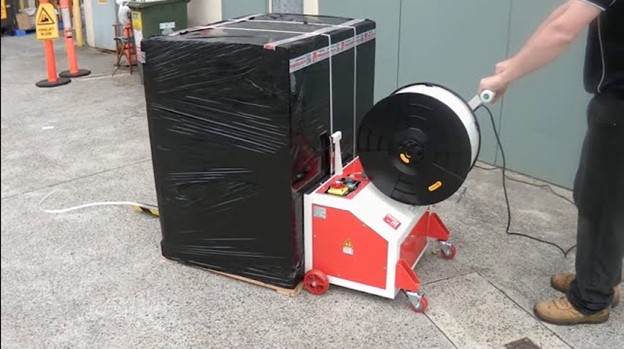
After wrapping the entire package, the belt will be tensioned, heat welded, and cut using mechanisms inside the machine. Depending on the nature of the goods to be transported, the rope tension can be flexibly adjusted to both ensure stability and not affect the product inside. Current semi-automatic pallet strapping machines usually provide belt tension from 100-600 N.
Speed and capacity
With the support of machinery, pallet strapping machines provide significantly faster strapping speeds than traditional strapping methods. The greater the number of automated strapping steps, the higher the speed, so the automatic pallet strapping machine will achieve better productivity than the semi-automatic type, in return the cost will also be higher.
Easy operation and user-friendly interface
Most pallet strapping machines have integrated control screens, creating a user-friendly interface. For semi-automatic pallet strapping machines, the steps that require human assistance are quite simple and can be easily operated after just a short time of training and getting used to the equipment.
Safety features
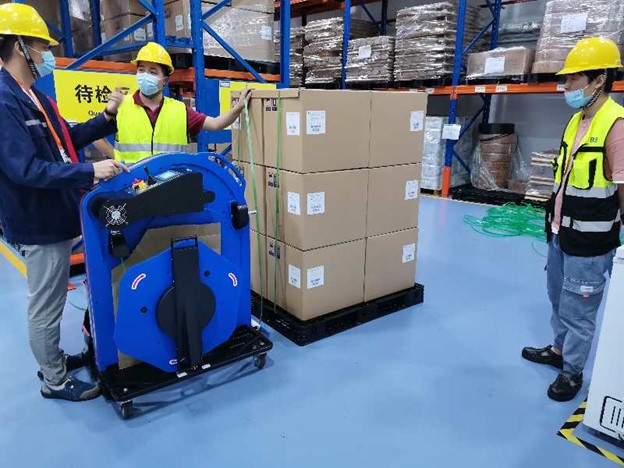
Semi-automatic pallet strapping machines usually have a weight of 100 - 140 kg, so the machine is installed on a frame with wheels for easy movement and manipulation. The method of strapping pallets is simple and healthy. The machine is designed so that the support person can stand upright, without having to bend or walk around the pallet too much, helping to reduce the risk of spinal injury for workers.
Durability under continuous use
The machine frame is designed with sturdy metal, electrostatically painted to ensure durability during use. The belt feeder can accommodate belts of sufficient length to ensure continuous strapping. The machine will automatically stop and enter stop mode after 60 minutes of inactivity to help save energy.
Benefits of pallet strapping machines
Increased packaging productivity
An automatic pallet strapping machine automates key operations, including strap feeding, tensioning, heat sealing, and cutting at the end of each strapping cycle. Compared with manual strapping methods, the machine can reduce processing time for each load and maintain a more consistent strapping cycle. For high-volume production lines, the machine can be integrated with conveyors, pallet handling systems, or robots to support continuous strapping operations. Actual throughput depends on factors such as the number of straps required per pallet, load dimensions, positioning time, and the pallet feeding and discharge method.
Improved load stability
Strapping applies a holding force that secures individual packages together and helps stabilize the load on the pallet, reducing the risk of cartons or products shifting during lifting, storage, and transportation. For loads consisting of multiple layers or products that are prone to movement during handling, proper strapping can help maintain the overall stability of the palletized load. However, load securing performance does not depend solely on strap tension. The number and position of straps, stacking method, packaging rigidity, and product characteristics also affect the ability to stabilize the load. Therefore, strapping parameters should be configured according to the actual characteristics and securing requirements of each type of product.
Reduced manual operations
With a fully automatic strapping system, the machine can complete the strapping cycle without requiring direct operator intervention at the strapping position. In a semi-automatic configuration, the operator primarily handles pallet positioning or strap placement and activates the cycle according to the machine design. Reducing manual operations not only saves processing time but also minimizes dependence on individual operator speed and working methods. Particularly when handling large or heavy pallets, automating the strapping process can reduce repetitive manual tasks and support better working conditions.
More consistent strapping quality
When parameters such as strap tension, strap position, and sealing conditions are controlled by the machine, pallets can be strapped according to the same predefined process. This helps reduce variations between loads caused by manual handling and provides greater consistency across the finished output of the packaging line. For businesses handling multiple product configurations, different strapping programs can be set according to load dimensions and securing requirements. Standardizing strapping conditions also makes quality inspection and operational management more consistent and easier to control.
Support for protecting goods during transportation
Strapping helps secure individual packages on a pallet and limits relative movement between loads during transportation. When combined with an appropriate stacking method and other protective packaging materials, a strapping system can help reduce the risk of load shifting, tipping, or packages colliding with one another.
However, strapping cannot completely replace other protective packaging measures. For fragile products, goods with sensitive surfaces, or loads with special structural characteristics, businesses should combine strapping with cartons, corner protectors, stretch film, or other suitable packaging materials to achieve the required level of protection.
Applications of pallet strapping machines
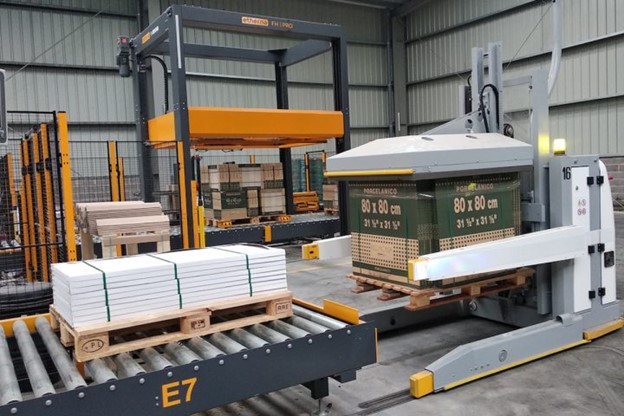
Pallet strapping machines are used across various packaging and logistics operations, particularly in systems where goods need to be secured before being placed into storage or transported. Depending on product characteristics and process requirements, the equipment can be used as a standalone unit or integrated with conveyors, robots, stretch wrapping machines, and other pallet handling equipment.
Warehouses and logistics centers
In warehouses, straps are used to secure loads on pallets before they are moved to storage or shipping areas. Consolidating individual packages into a stable load makes handling with forklifts and other pallet transport equipment more convenient. For logistics centers with high processing volumes, automatic pallet strapping machines can be connected to conveyor systems and material handling equipment to reduce handling time at the end-of-line packaging area.
Manufacturing plants and distribution centers
Manufacturing plants and distribution centers often handle a wide range of finished products, semi-finished goods, or materials arranged on pallets. A pallet strapping machine helps secure the load before it is transferred to storage, dispatched for delivery, or moved to the next stage of the process.
Depending on pallet dimensions and load stability requirements, businesses can select configurations that apply one or multiple straps in different directions. In automated production lines, the strapping machine can be installed downstream of the palletizing process to create a continuous packaging workflow.
Food and beverage industry
In the food and beverage industry, products such as bottles, cans, cartons, and trays are commonly consolidated onto pallets for easier handling and transportation. Strapping helps secure individual packages, limit load movement, and reduce the risk of load shifting or tipping during handling. For fragile products such as glass bottles, strap tension and positioning should be selected appropriately to provide sufficient load stability while avoiding excessive pressure on the packaging or products.
E-commerce and distribution warehouses
E-commerce fulfillment centers typically handle large volumes of goods in a wide range of sizes and configurations. When products are consolidated into pallets or larger loads, pallet strapping machines can be used to secure them before transportation between different areas or shipment. When integrated with conveyors, sorting systems, palletizing robots, and other packaging equipment, a pallet strapping machine can become part of an automated packaging line. This helps reduce manual operations while maintaining a more consistent processing rate.
Factors to consider when selecting a pallet strapping machine
Load dimensions and weight
Pallet and load dimensions are among the first specifications to determine when selecting a machine. Businesses should provide the overall length, width, height, and total weight of the fully loaded pallet to identify a machine with a suitable working range.
In addition to dimensions, the shape and arrangement of products on the pallet should also be considered. A tall load with multiple product layers or an unstable center of gravity may require a different strapping configuration from a low, compact load with a more rigid structure.
Strap type and tension requirements
The type of strap directly affects load-securing performance and the machine's operating requirements. Depending on the application, businesses may use plastic straps such as PP or PET, or other strap types suited to specific packaging requirements.
Strap tension should also be configured according to the characteristics of the load. Insufficient tension may result in inadequate load securing, while excessive tension can deform cartons or affect the products. Therefore, machine selection should not be based solely on maximum tension. The adjustable tension range and the machine's ability to control tension under actual operating conditions should also be taken into account.
Number and position of straps
The required number of straps depends on the load's dimensions, weight, shape, and stability requirements. Some pallets may only require one or two straps in a single direction, while larger or multi-layered loads may require a combination of horizontal and vertical strapping.
Strap positioning should also be determined based on the way products are arranged on the pallet. Improper strap placement can result in uneven distribution of the holding force across the load. Therefore, businesses should define the actual strapping pattern in advance to select a machine configuration that meets their requirements.
Throughput and cycle time
Packaging volume is a major factor in determining the required level of automation. For moderate production volumes, a semi-automatic machine may meet operational requirements without the need for a highly complex system. In contrast, high-frequency strapping operations should consider an automatic machine that can be directly integrated with the pallet conveying system.
When evaluating throughput, businesses should not consider only the number of straps the machine can apply per minute. Pallet positioning time, spacing between pallets, the number of straps required per load, and pre- and post-strapping handling time all affect the actual throughput of the entire system.
Installation space and integration capabilities
The installation location should be determined based on the machine dimensions, pallet flow direction, and the space required for operation and maintenance. If the machine is integrated into an existing production line, factors such as conveyor height, pallet infeed direction, upstream and downstream equipment, and communication between control systems should be considered.
For businesses planning to expand their automation systems, it is advisable to select equipment capable of communicating and integrating with the line's PLC or control system. This provides greater flexibility when connecting the pallet strapping machine with conveyors, palletizing robots, stretch wrapping machines, or other pallet handling equipment in the future.
Operating environment and maintenance requirements
The operating environment can affect equipment durability and stability. Factors such as dust, humidity, temperature, operating frequency, and the characteristics of packaging materials should be considered when selecting the appropriate machine configuration.
Businesses should also identify the components that require periodic maintenance, the replacement intervals for wear parts, and how easily mechanical assemblies can be accessed for inspection and servicing. For continuously operating production lines, the availability of technical support and replacement parts is another important factor to evaluate before making an investment.
Investment cost and operational efficiency
The machine purchase price represents only part of the total project cost. When evaluating investment efficiency, businesses should consider throughput, labor requirements, strap consumption, maintenance costs, downtime, and the potential for future system expansion. A machine with a lower initial investment may increase long-term operating costs if it cannot meet the required production volume or is unsuitable for the actual load configuration. Conversely, for low-volume operations, investing in a highly automated system that significantly exceeds actual requirements may result in inefficient capital utilization.
Maintenance and troubleshooting of pallet strapping machines
Regular maintenance helps pallet strapping machines maintain stable operation and reduces the risk of problems occurring during production. In addition to general inspections, businesses should monitor the components directly involved in strap feeding, tensioning, sealing, and cutting to identify abnormal signs at an early stage.
Troubleshooting common issues
Various issues may occur during operation, including strap jams, unstable strap feeding, insufficient tension, or incomplete heat sealing. Possible causes may be related to strap quality, strap positioning, guide mechanisms, tensioning components, sealing temperature, or mechanical components that require cleaning or adjustment. When a problem occurs, the root cause should be identified before adjusting machine parameters or replacing components. The machine should not be operated continuously when the strap is jammed or the strapping mechanism shows abnormal behavior, as this may increase the risk of equipment damage.
Performing regular maintenance
Typical maintenance tasks include cleaning the strap feeding and guiding areas, inspecting the drive mechanism, checking the strap tensioning and sealing units, and inspecting sensors, electrical wiring, and the control system according to the requirements of each machine model.
Maintenance intervals should be determined based on the machine configuration, operating frequency, strap type, and environmental conditions. For high-frequency production lines, regular equipment condition monitoring can help identify early signs of wear and reduce the risk of unplanned downtime.
Ensuring safety during maintenance and repair
Before cleaning, adjusting, or repairing the machine, it should be stopped and appropriate energy isolation procedures should be carried out in accordance with the equipment's safety requirements. Maintenance personnel must ensure that all moving mechanisms have come to a complete stop and that there is no risk of unintended machine start-up. Particular attention should be paid to the heat-sealing area and the strap tensioning and cutting mechanisms before any maintenance work is performed. Maintenance and repair should be carried out by qualified personnel or in accordance with the manufacturer's technical instructions.
Pallet strapping machine offers high operating speed to improve packaging productivity, while helping maintain load stability and standardize the strapping process. Depending on the configuration, the machine can reduce repetitive manual operations and apply consistent strap tension across palletized loads. This makes it a practical solution for businesses looking to improve packaging efficiency and reduce reliance on manual strapping operations. When selecting a pallet strapping machine, businesses should consider factors such as load dimensions and weight, strap type, strapping requirements, production throughput, installation space, and compatibility with the existing production line. Choosing a machine based on actual operating conditions helps ensure that the equipment meets both current packaging requirements and future automation needs.
If you are looking for a suitable pallet strapping machine for your production line, contact CNC VINA for technical consultation and a solution tailored to your products and operating requirements.
VIETNAM CNC & TECHNOLOGY APPLICATION JOINT STOCK COMPANY
Factory: Song Cung Industrial Cluster, Dong Thap Commune, Dan Phuong District, Hanoi, Vietnam
Office: Rox Tower (Rox Center Goldmark City), 136 Ho Tung Mau Street, Bac Tu Liem District, Hanoi, Vietnam
Phone: +84.916 63 9355 / +84.915 74 4664
Website: www.cncvina.com.vn ; www.cncvina.net


