 Tiếng
Việt
 Tiếng
Anh
 Tiếng
Nhật




 Tiếng Anh

What is a programmable sewing machine? Structure, working principle, and industrial applications

Programmable sewing machines are automated machines that control sewing patterns based on pre-installed programs, ensuring precise control over the position, shape, and stitch density of each seam. In the production of automotive airbags and seat covers, seams can extend over several meters, follow multiple curved sections, and require a high level of accuracy. At high production volumes, manual sewing makes it difficult to maintain consistent quality because the results depend heavily on operator skill, increasing the risk of variations between products. Applying programmable sewing machines helps automate this process, reduce reliance on manual operations, and maintain consistent production quality.
How are programmable sewing machines constructed, and how do they operate? What types of machines are available, and how are they used in industrial manufacturing? Join CNC VINA to explore these aspects in detail in the following article.
1. What is a programmable sewing machine?
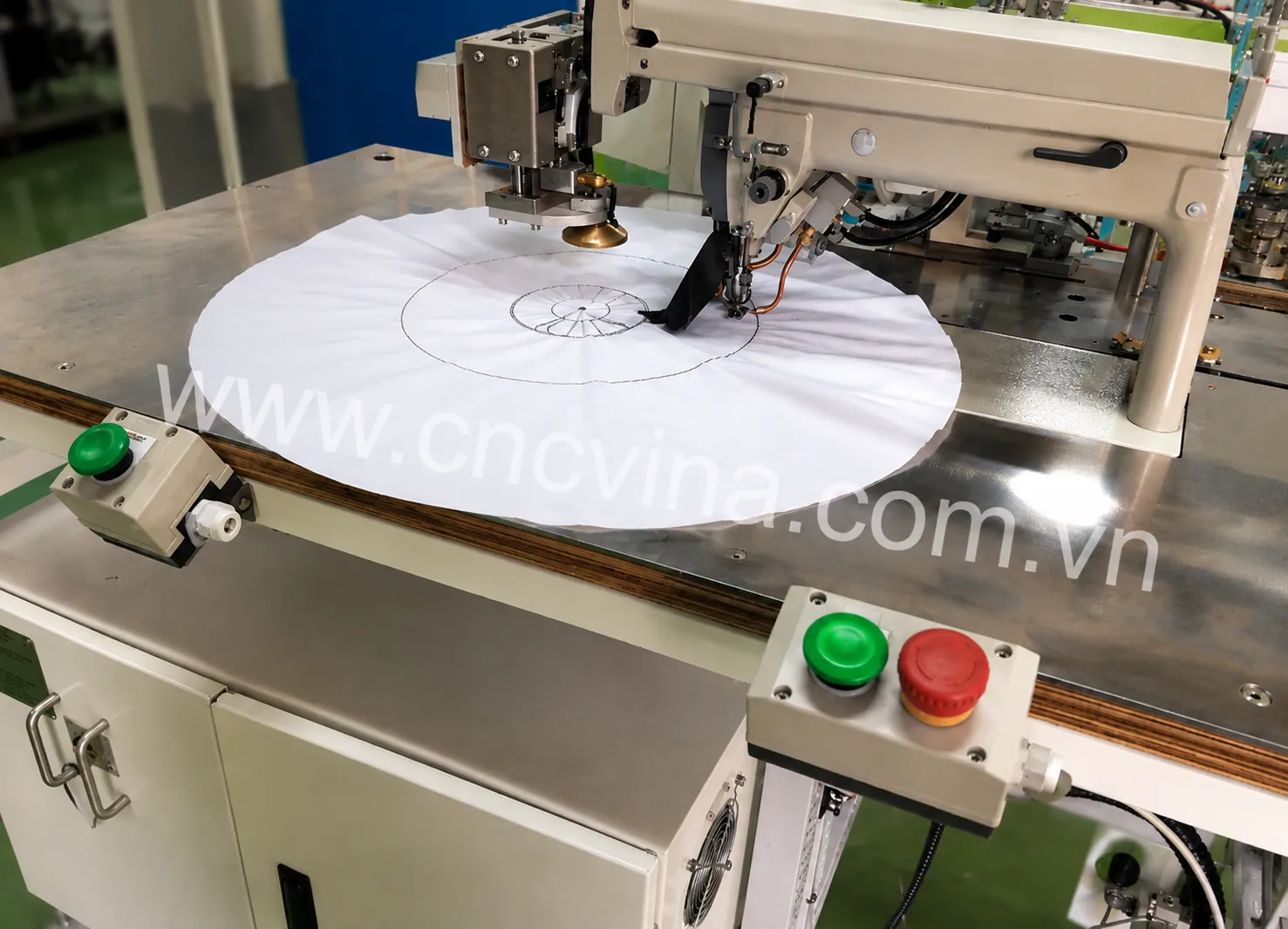
A programmable sewing machine is an industrial sewing machine that uses a control system to execute sewing patterns according to programs configured and stored in advance. In a fixed-head configuration, the workpiece holder moves along the X and Y axes, positioning the required sewing path beneath the needle according to the programmed coordinates. Unlike conventional sewing methods, the operator does not need to continuously guide the material throughout the sewing process. Once the workpiece has been positioned and clamped, the machine automatically executes the programmed sewing pattern.

Some of the key features of programmable sewing machines include:
Automatic sewing path control: The machine moves the material along a predefined trajectory and can sew straight lines, curved lines, and complex patterns.
Sewing program storage: Sewing patterns can be saved and reused in subsequent production runs.
Stitch position control: The control system maintains the programmed coordinates, stitch spacing, and seam geometry throughout the sewing process.
Integrated automatic functions: Depending on the machine configuration, it may perform thread trimming, workpiece clamping, template lifting and lowering, and other auxiliary operations.
Thanks to these features, programmable sewing machines are widely used in applications requiring a high degree of repeatability, particularly when products involve complex sewing patterns or precise positioning requirements.
2. Structure of a programmable sewing machine
An industrial programmable sewing machine system typically consists of a sewing machine head, a motion-controlled worktable, material clamping fixtures, a control unit, and auxiliary mechanisms. These components work together to ensure accurate material positioning and movement along the programmed trajectory throughout the sewing process. The specific configuration may vary depending on product dimensions, sewing area, and the level of equipment automation.

2.1. Sewing machine head and automatic thread trimming mechanism
The sewing machine head is the main component responsible for stitch formation through the coordinated operation of the needle, stitch-forming mechanism, thread supply system, and drive motor. In a programmable sewing machine, the head is typically mounted in a fixed position above the worktable, while the material moves along the programmed trajectory. Its main components include the sewing needle, stitch-forming mechanism, thread supply unit, drive motor, and automatic thread trimming mechanism. Depending on the material type and production requirements, the sewing head is selected based on its ability to handle different material thicknesses, fabric layers, stitch types, and operating speeds.
2.2. Worktable and X–Y axis drive system
The worktable holds and moves the material along the X and Y axes to create an accurate sewing path. The drive system typically uses servo motors or stepper motors, depending on the machine configuration and technical requirements.
- X-axis: Controls horizontal movement.
- Y-axis: Controls vertical movement.
- Drive motors: Control movement position, speed, and acceleration.
Both axes must remain synchronized with the sewing head speed to maintain consistent stitch spacing. For large-format programmable sewing machines, the worktable must be designed according to the material dimensions, fixture weight, and working stroke.
2.3. Jig and material clamping mechanism
The jig is responsible for positioning and securing the material during sewing, preventing movement that could cause deviations in the sewing path. It is typically designed to match the shape and dimensions of each product. Its basic structure includes a jig frame, positioning surface, clamping mechanism, pneumatic cylinders, and sensors for detecting the clamping status. In factories producing multiple product models, interchangeable jigs can be designed to reduce product changeover time.
2.4. Controller, display screen, and program input ports
The controller serves as the central processing unit, receiving sewing programs and coordinating the operation of the sewing head, X–Y axes, and auxiliary mechanisms. The control screen allows operators to select programs, adjust parameters, and monitor machine status. Its main functions include storing programs by product code, setting sewing coordinates and trajectories, adjusting operating speed, controlling clamping and releasing mechanisms, and displaying error alerts. Some models of electronic programmable sewing machines also support program uploading and backup via USB ports.
2.5. Pneumatic system, sensors, and safety mechanisms
The pneumatic system supplies the force required for auxiliary operations such as jig lifting and lowering, and material clamping and releasing. Sensors detect jig positions, workpiece clamping status, and operating conditions, allowing the controller to execute the programmed sequence correctly. In addition, the machine may be equipped with an emergency stop button, protective guards around moving areas, and warning systems to reduce risks during operation and maintenance.
3. Working principle of a programmable sewing machine
A programmable sewing machine operates based on a pre-configured control program that defines the sewing path. Once the material has been positioned and secured on the jig, the controller coordinates the movement of the worktable along the X and Y axes with the operation of the sewing head. The needle penetrates the material, forms stitches, and joins the layers according to the programmed coordinates, speed, and operating parameters. This process automates sewing operations, reduces reliance on manual handling, and maintains consistent quality across products within the same production batch.

The basic operating process consists of the following steps:
Step 1: Sewing path design and configuration
The sewing path is created using software or programming tools compatible with the machine's control system. The designer defines the coordinate points, sewing pattern, stitch length, and other required parameters. For products involving multiple curved sections or frequent changes in direction, the program must be checked to ensure that the movement trajectory accurately matches the actual product geometry.
Step 2: Uploading the program to the controller
Once completed, the program data is transferred to the machine controller through a supported connection method, such as USB or a compatible data transmission interface. The operator selects the program corresponding to the product code and verifies the parameters before starting the machine.
Step 3: Positioning and securing the material on the jig
The material is placed in the correct position on the jig according to the designated reference points. Pneumatic clamping mechanisms or dedicated fixtures hold the material securely, preventing movement while the worktable travels. Accurate initial positioning is essential to ensuring the precision of the entire sewing path.
Step 4: Automatic sewing operation
After the operating conditions have been confirmed, the machine starts executing the program. The controller coordinates the movement of the worktable along the X–Y axes while synchronizing it with the sewing head. The material moves along the programmed trajectory, allowing the needle to produce seams in the required positions and patterns.
Step 5: Thread trimming, jig release, and product inspection
Once the program is completed, the automatic thread trimming mechanism cuts the thread if this function is equipped. The jig then releases the material, allowing the operator to remove the finished product or transfer it to the next production stage. The product is inspected for seam position, stitch count, thread condition, and other relevant technical requirements. When introducing a new program or changing the jig, a trial run and adjustments are required before mass production begins.
With this process, programmable sewing machines can produce complex sewing patterns with a high degree of repeatability, reducing dependence on operators manually guiding the material.
4. Applications of programmable sewing machines in industrial manufacturing
Thanks to their ability to control sewing trajectories and store programs, programmable sewing machines are used across various industries involving fabrics, leather, and technical textile materials. These machines are particularly suitable for products with fixed geometries, complex sewing patterns, and stringent requirements for consistent quality.
4.1. Automotive airbag manufacturing
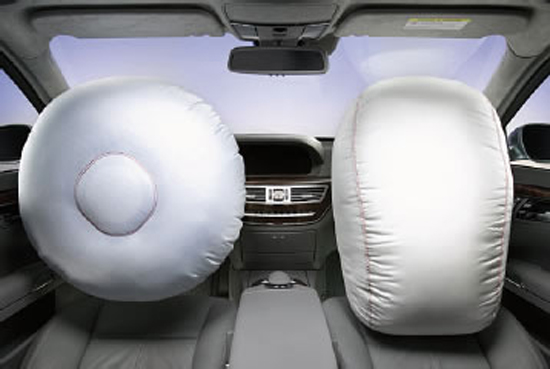
Automotive airbags are components of the passive safety system, and their fabric bags must meet strict requirements for structure, durability, and designed deployment performance. The sewing process may involve joining multiple fabric layers, creating seams along specific contours, and forming reinforced load-bearing stitch patterns. These seams must be controlled in terms of position, stitch count, spacing, and joint quality. A programmable sewing machine performs sewing operations according to predefined coordinates, reducing deviations caused by manual handling and helping maintain consistency across products. In particular, for large airbag panels or products involving multiple complex sewing patterns, large-format programmable sewing machines can automate the process and reduce operator handling time.
4.2. Sewing automotive seat covers and interior components
Automotive seat covers typically feature multiple decorative seams, joining seams, and curved contours designed to match the seat structure. Sewing accuracy directly affects product appearance, assembly compatibility, and consistency. Programmable sewing machines can be used to sew components according to fixed patterns, helping control seam spacing and minimize variations between products within the same production batch. For automotive interior manufacturers, programmable equipment also facilitates the management of multiple sewing programs for different product codes.
4.3. Safety belt manufacturing
Automotive seat belts use high-strength textile materials, with joining points and stitching patterns designed to meet specific technical requirements. Some sewing operations involve creating fixed stitch patterns to connect the webbing to metal components or other related parts. Programmable sewing machines can support the execution of repeatable sewing patterns while controlling seam position and geometry. Equipment selection must take into account material thickness, thread type, and the load-bearing requirements of each product.
4.4. Footwear and bag manufacturing
In the footwear and bag industries, many components feature predefined sewing patterns that require high levels of aesthetic quality and consistency. Programmable sewing machines can be used to sew bag straps, bag panels, decorative components, shoe parts, and other areas that are difficult to handle using conventional manual material feeding methods. Program storage makes it easier for manufacturers to switch between product designs while reducing dependence on individual operators' sewing control skills.
4.5. Protective equipment and technical textile manufacturing
Protective products such as specialized garments, equipment bags, straps, and technical textile materials often contain multiple components that must be joined using predefined sewing patterns. Programmable sewing machines support repeatable sewing operations, particularly in areas where seam geometry and stitch spacing require precise control. Depending on the material characteristics, the machine can be configured with suitable sewing heads, needles, threads, and jigs.
Programmable sewing machines are a suitable solution for manufacturing processes that require predefined sewing patterns, high repeatability, and consistent quality control. By controlling movement through programmed instructions, these machines reduce reliance on manual material feeding, standardize production processes, and help improve manufacturing productivity. To select suitable equipment, manufacturers need to evaluate product dimensions, material characteristics, sewing requirements, production volume, and the desired level of automation. With experience in machine design, manufacturing, and automation system integration, CNC VINA focuses on developing equipment solutions tailored to actual production requirements, helping manufacturers optimize sewing operations and improve production line efficiency.
For customers interested in the design and manufacture of automatic programmable sewing machines, please contact us:
VIETNAM CNC AND TECHNOLOGY APPLICATION JOINT STOCK COMPANY
Factory: Song Cung Industrial Cluster, Dong Thap Commune, Dan Phuong District, Hanoi, Vietnam.
Office: Rox Tower (Rox Center Goldmark City), 136 Ho Tung Mau Street, Phu Dien Ward, Hanoi, Vietnam.
Tel: +84 916 639 355 / +84 915 744 664