 Tiếng
Việt
Tiếng
Việt
 Tiếng
Anh
Tiếng
Anh
 Tiếng
Nhật
Tiếng
Nhật




 Tiếng Anh

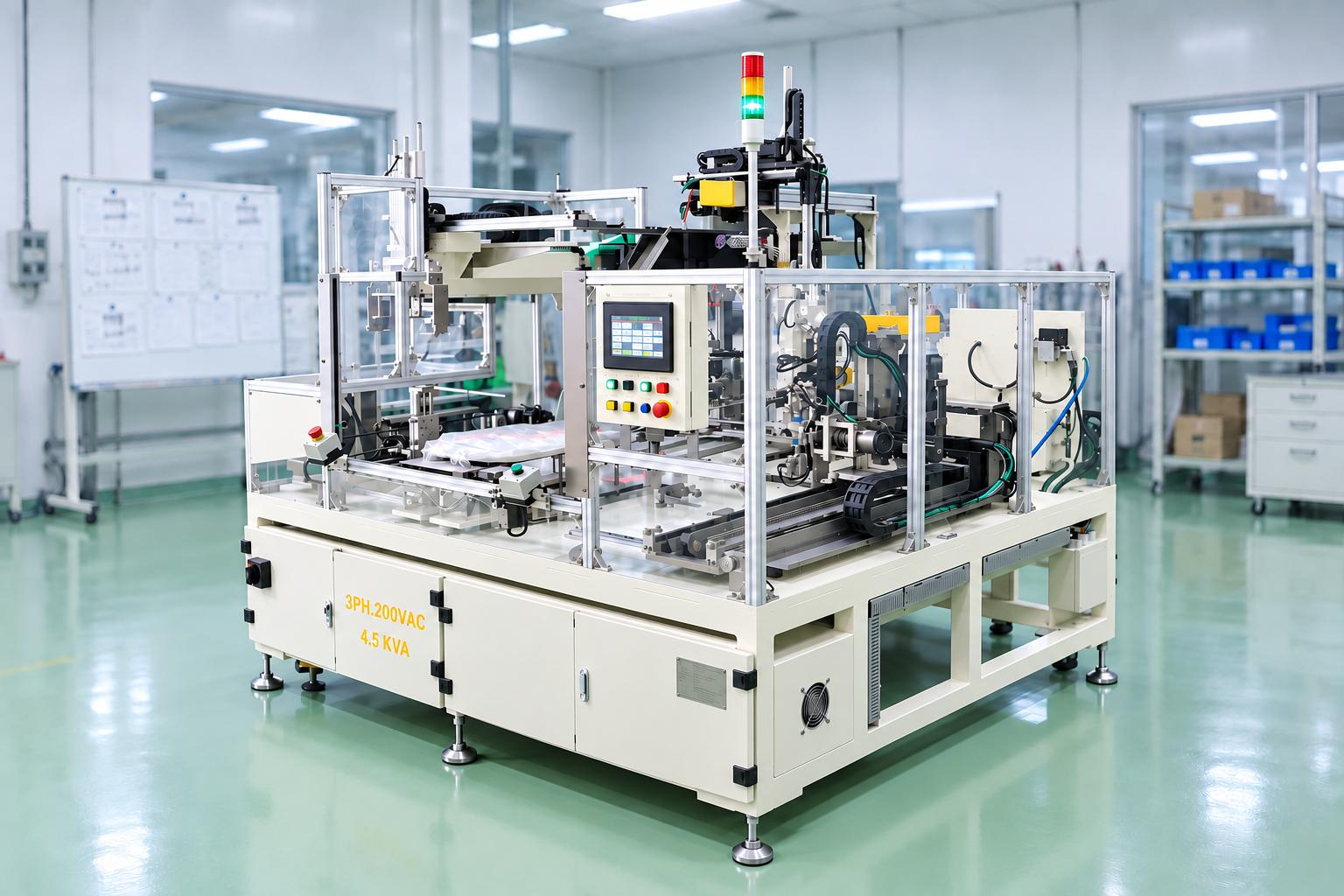
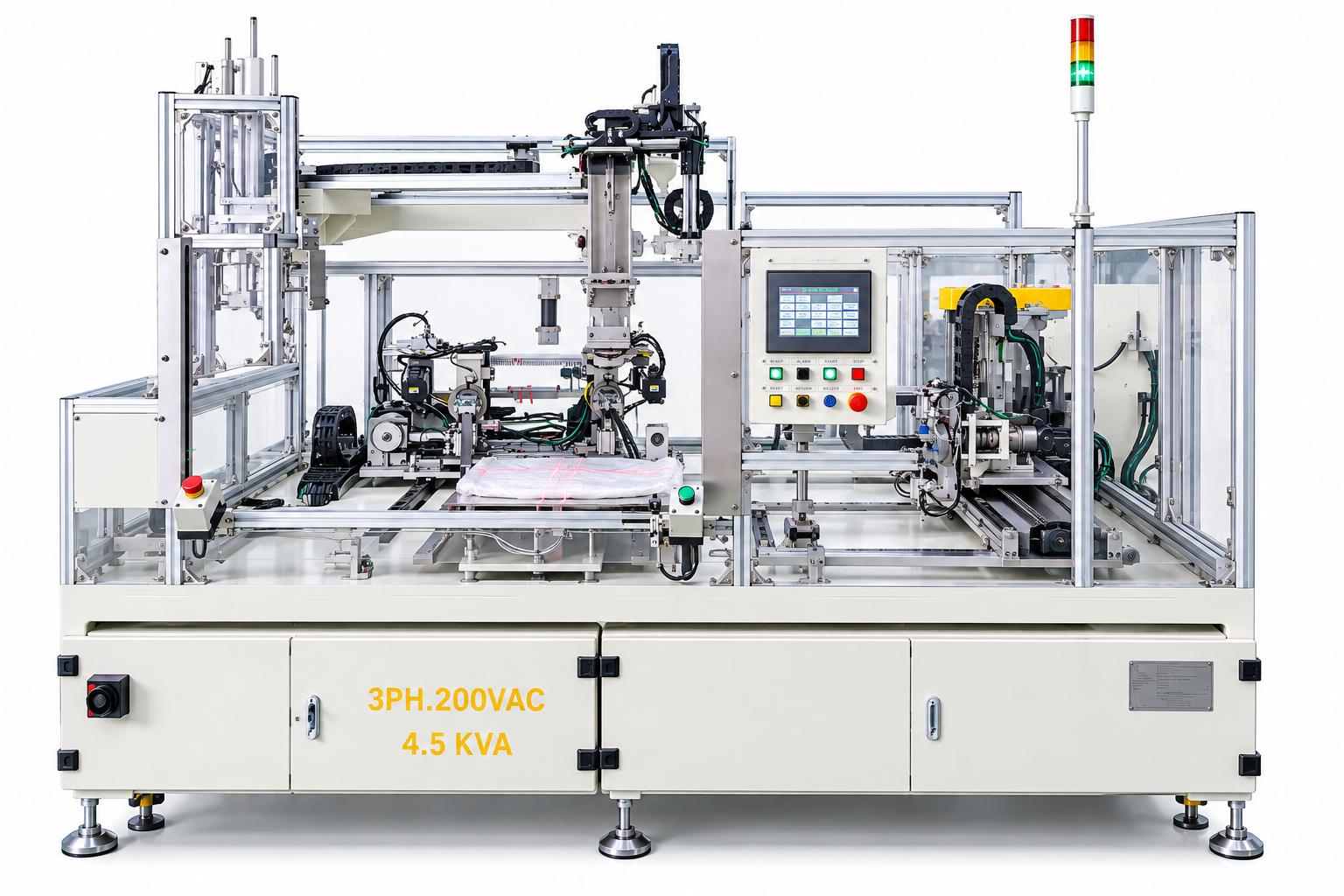
Automatic product folding and rolling machine
Automatic product folding and rolling machine is a specialized piece of equipment designed to replace manual folding, crease forming, and rolling operations in industrial production. The operator positions the product in the fixture, confirms clamping, and starts the cycle. The servo-driven and pneumatic mechanisms then carry out the product holding, two-sided folding, crease forming, and rolling operations in sequence according to the preset program.
The machine is custom-designed to meet the requirements of each product. Fixture dimensions, holding positions, folding sequences, rolling paths, movement speeds, and interchangeable fixtures can be configured to suit the material properties, product geometry, and packaging requirements of each production line.
VIETNAM CNC & TECHNOLOGY APPLICATION JOINT STOCK COMPANY
Hotline: +84.916 63 9355 / +84.915 74 4664
Email: Sales01@cncvina.com.vn / Sales03@cncvina.com.vn
Product description

Automatic product folding and rolling machine is a specialized industrial machine designed to replace manual folding, crease forming, and rolling operations in manufacturing processes. The operator places the product in the positioning fixture, confirms that it is securely clamped, and starts the operating cycle. The servo-driven and pneumatic mechanisms then sequentially perform product holding, folding both edges, crease forming, and rolling according to the preset program. The machine is custom-designed to meet the requirements of each product. The fixture area, holding positions, number of folds, rolling path, movement speed, and interchangeable fixtures for different product models can be adjusted to accommodate various materials, product shapes, and packaging requirements.
What is an automatic folding and rolling machine?
An automatic folding and rolling machine uses controlled mechanisms to perform product holding, edge folding, and rolling operations according to a preset program. By integrating servo systems, pneumatic mechanisms, and dedicated fixtures, the machine processes products with defined shapes, reducing manual operations while maintaining consistent and repeatable production results.
Applications of automatic folding and rolling machines in industrial manufacturing
Automatic folding and rolling machines are suitable for production processes that require soft or flexible products to be folded and rolled into specific shapes or in a defined sequence. Depending on the material, product dimensions, and processing requirements, the machine can be customized for use in the garment industry, textile accessories manufacturing, and product preparation processes prior to packaging.
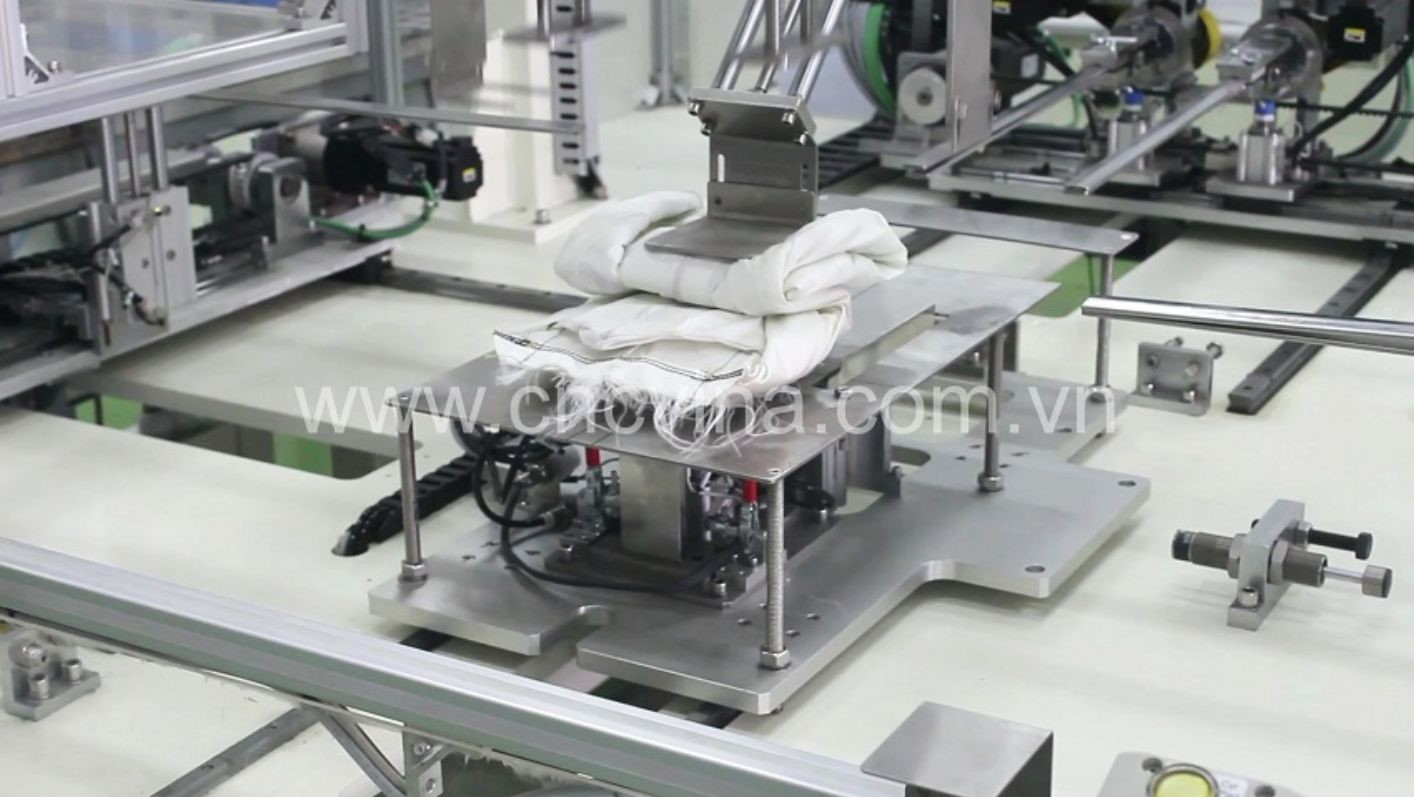
Some typical applications include:
-
Folding and rolling fabric products, fabric bags, or sewn components before packaging.
-
Folding edges and forming creases in soft or flexible products with defined shapes.
-
Rolling products according to preset positions, number of turns, and movement paths.
-
Processing different product models by changing fixtures and selecting the corresponding programs on the HMI.
The suitability of the machine for each application should be evaluated based on material properties, product geometry, and actual folding and rolling requirements. This evaluation provides the basis for determining the appropriate clamping mechanisms, positioning methods, and motion control programs.
Structure and main components of the automatic product folding and rolling machine
The machine consists of product positioning, holding, edge folding, folding and rolling, and product transfer mechanisms, together with an integrated control system. These mechanisms are designed to operate in a coordinated sequence, ensuring that the product remains correctly positioned throughout the folding and rolling process.
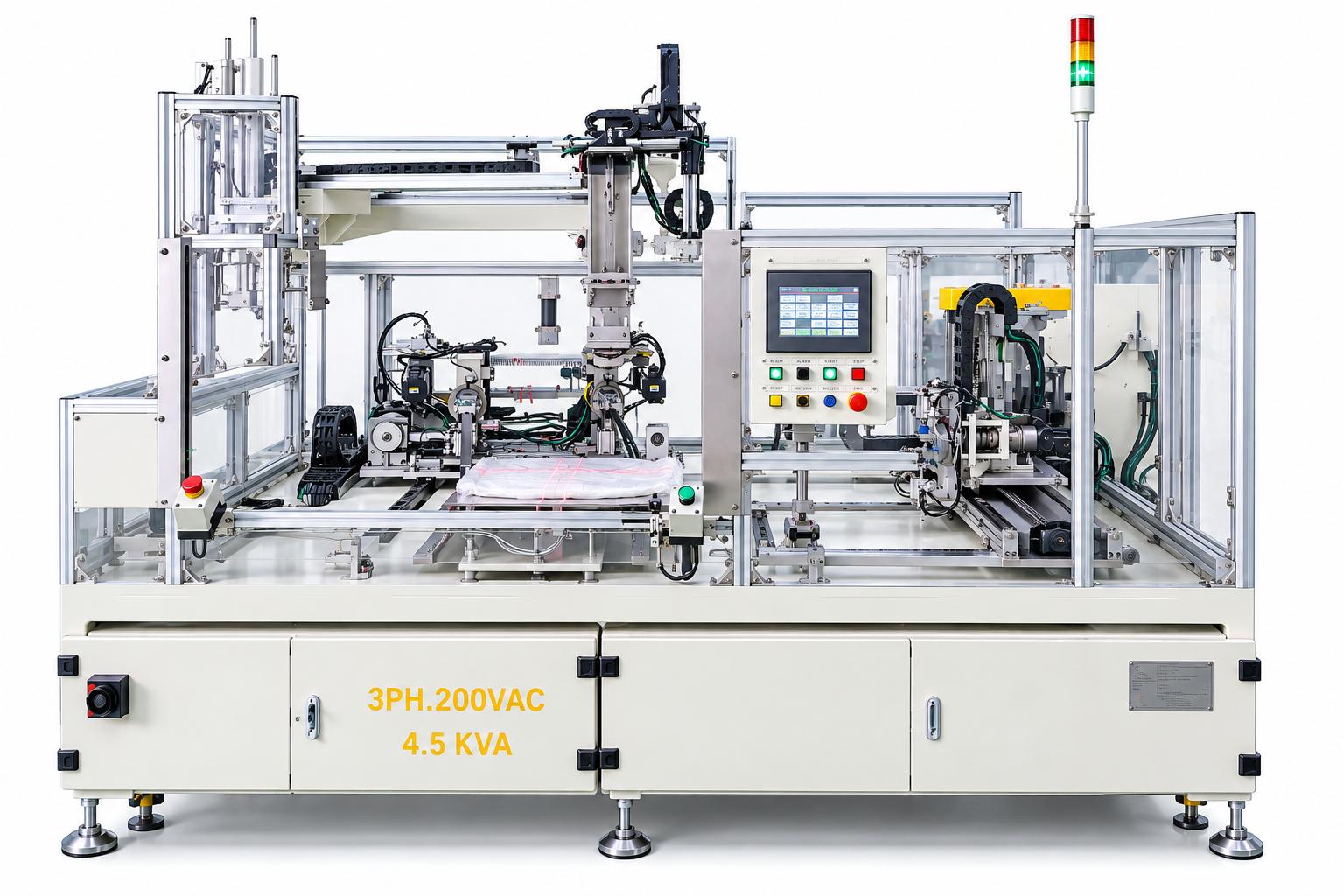
Input positioning unit
The input positioning unit is where the operator places the product before the machine starts its operating cycle. The fixture is designed according to the product's shape and incorporates positioning pins and clamping mechanisms to establish the initial position. Depending on the machine configuration, the operator may use a foot pedal to activate the product clamping mechanism. The fixture can be replaced when switching to a different product model, helping maintain consistent product positioning and minimize misalignment during operation.
Product holding unit
The product holding unit maintains the product's position during edge folding and rolling operations. The mechanism moves to preset positions to secure the product and minimize displacement while other units perform their movements. Holding positions are configured for each product model. Servo-controlled axes are used where precise motion control is required, allowing the holding positions to be adjusted according to the folding and rolling sequence.
Edge folding unit
The edge folding unit folds both sides of the product using clamping mechanisms and rotational movements. The clamping positions, movement strokes, and end positions are configured according to the characteristics of each product model. The clamping jaws can be designed for replacement when changing product dimensions or shapes. The selection of the folding mechanism depends on the material's thickness, flexibility, and ability to retain creases.
Folding and rolling unit
The folding and rolling unit performs the rolling operation after the product edges have been folded and the product is securely held. In the reference configuration, this unit combines rotational movement with X- and Z-axis motion to follow a predefined path. Intermediate points, end positions, and movement speeds can be configured on the HMI for each product model. This allows manufacturers to adjust the rolling sequence when processing requirements change, within the machine's designed operating range.
Product transfer and unloading unit
The product transfer unit uses linear mechanisms, pneumatic clamping cylinders, and lifting cylinders to move products between working positions according to the programmed sequence. Position sensors provide status signals to coordinate the movements of different mechanisms. Once the operating cycle is complete, the operator releases the clamp and removes the product according to the designed unloading procedure. In the standard reference configuration, product unloading is performed manually. An automatic unloading unit can be integrated if the production line requires further reduction of manual operations.
Control and safety system
The machine uses a PLC combined with an industrial HMI to manage operating sequences, select product programs, and monitor equipment status. Depending on project requirements, the PLC can be selected from Keyence, Mitsubishi, Siemens, or equivalent models that meet the customer's technical standards. The HMI supports manual, automatic, and parameter-setting modes. Information such as axis positions, cylinder status, production counters, cycle time, and alarms can be displayed according to the control system configuration. The machine incorporates safety measures appropriate for its moving mechanisms, which may include protective guards, door sensors, emergency stop buttons, stack lights, and safety interlocks. The specific safety configuration must be confirmed against the design documentation for each machine.
Working principle of the automatic folding and rolling machine
The machine operates according to a preset program. The operator is responsible for loading the product and starting the cycle, while the folding, holding, and rolling mechanisms operate automatically in a coordinated sequence.
A typical operating sequence includes the following steps:
-
The operator places the product in the positioning fixture and activates the clamping mechanism using the foot pedal, if equipped.
-
The operator starts the cycle using the designated control switch, following the operating instructions.
-
The edge folding unit moves into position and folds both sides of the product.
-
The product holding unit moves to preset positions to maintain the product's shape during folding.
-
The folding and rolling unit combines rotational movement with controlled axis motion to roll the product according to the selected program.
-
Once the cycle is complete, the machine returns to a state that allows product removal. The operator releases the clamp and removes the product, or the automatic transfer system performs this operation if equipped.
The specific operating sequence may vary depending on the product model and machine configuration. Before starting automatic operation, the fixture position, sensor status, and mechanism movements should be checked in manual mode according to the technical operating instructions.
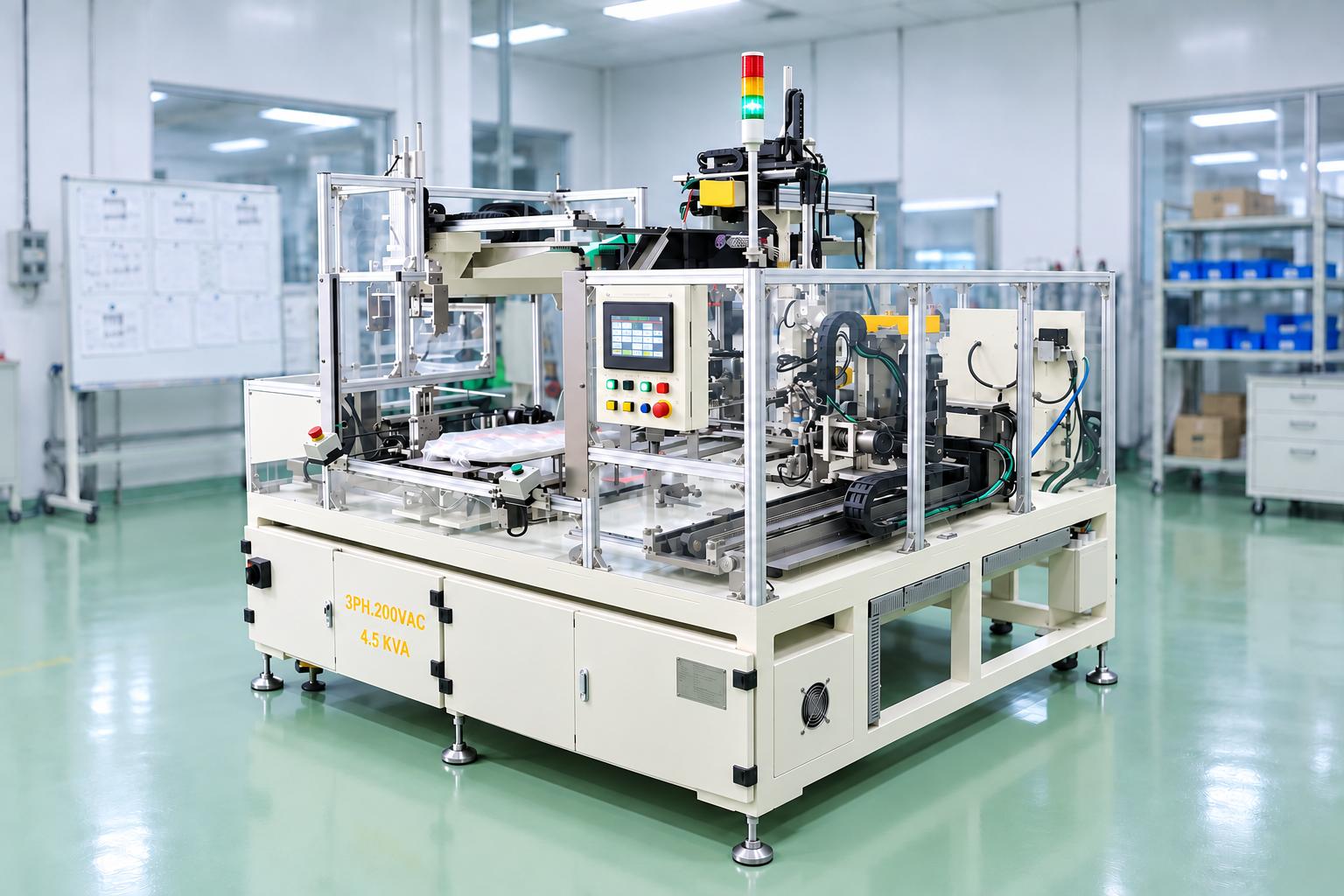
An automatic folding and rolling machine helps manufacturers standardize repetitive folding and rolling operations. Its actual performance depends on product characteristics, workstation layout, and the selected machine configuration.
-
Consistent and repeatable results: Holding positions, folding points, and rolling paths are programmed to minimize variations caused by manual operations.
-
Reduced manual operations: Folding and rolling processes are automated after the operator loads the product and starts the cycle.
-
Controlled motion: Servo systems enable position and speed adjustments for the mechanisms equipped with servo drives.
-
Flexible product changeover: Fixtures and clamping jaws can be replaced, and the corresponding program can be selected when switching between product models within the machine's design range.
-
Convenient operation monitoring: The HMI can display equipment status, production counters, and alarms to support production process control.
These benefits should be evaluated through trials using actual products. In particular, crease retention and rolling quality depend on the material, product geometry, and process requirements.
Technical specifications of the automatic folding and rolling machine
The specifications below are based on the technical documentation for a reference machine configuration. For custom-designed machines, the dimensions, number of axes, fixtures, and operating parameters may vary according to the product and actual installation conditions.
| Item | Reference specifications |
|---|---|
| Machine type | Automatic product folding and rolling machine |
| Product loading method | Manual loading into the positioning unit |
| Folding and rolling method | Automatic operation using servo drives and pneumatic mechanisms |
| Overall dimensions | Approximately 2,200 × 2,050 × 1,620 mm |
| Operating height | Approximately 800–900 mm from floor level |
| Main power supply | Three-phase, AC 200 V, 50 Hz |
| Control voltage | DC 24 V |
| Compressed air pressure | Approximately 0.4–0.6 MPa |
| Power capacity | Approximately 4.5 kVA |
| Main functional units | Positioning, product holding, edge folding, folding and rolling, product transfer, and unloading |
| Main movements | Servo-driven holding and edge folding, rotational movement, and X/Z axes of the folding and rolling unit |
| Product changeover | Fixture and clamping jaw replacement, with program selection via the HMI |
| Control system | Keyence, Mitsubishi, Siemens, or equivalent PLC, depending on project requirements |
| Operator interface | Industrial HMI with Manual, Auto, Setting, and Alarm modes, depending on configuration |
| Safety features | Protective measures and interlocks according to the machine design |
Before placing an order, manufacturers should reconfirm the power supply, power capacity, compressed air pressure, installation dimensions, and safety functions against the technical documentation for the selected machine configuration.
Maintenance of the automatic folding and rolling machine
Regular maintenance helps maintain the stability of motion mechanisms, pneumatic systems, and control equipment. Inspection intervals should be determined according to the manufacturer's instructions, operating intensity, and working environment.
Key maintenance items include:
-
Linear guides and ball screws: Check backlash, lubrication, contamination, and any binding during movement.
-
Servo motors and axes: Monitor unusual noise, vibration, connection conditions, and drive alarms.
-
Pneumatic cylinders and air systems: Check for leaks, operating pressure, tubing condition, and stable clamping or lifting movements.
-
Fixtures and clamping jaws: Inspect fastening security, wear, and product positioning accuracy.
-
Sensors and electrical cabinet: Check signal operation, connectors, wiring, and abnormal alarms.
Before cleaning or maintenance, stop the machine, isolate the electrical and pneumatic supplies, release any residual air pressure according to the safety procedure, and verify that all mechanisms are in a safe state. Maintenance must not be performed while the machine could start or move unexpectedly.
Frequently asked questions about automatic folding and rolling machines
What types of products can an automatic folding and rolling machine process?
The machine can be designed for fabric products, fabric bags, sewn components, and certain flexible materials that require folding or rolling into defined shapes. Suitability must be assessed based on product dimensions, thickness, material properties, and finished-product requirements.
Can the machine process different product models?
Yes, within the limits of the machine design. Manufacturers can change fixtures and clamping jaws and select the corresponding control program. When products differ significantly in size or material properties, the feasibility of processing them on the same machine should be evaluated before design.
How does the folding and rolling unit work?
The unit combines rotational movement with controlled axes, depending on the machine configuration. Intermediate positions, end positions, and movement speeds are programmed to create a rolling path suitable for each product.
Can the machine automatically unload products after folding and rolling?
This depends on the configuration. In the reference configuration, the operator releases the clamp and removes the product after the cycle is complete. An automatic unloading or transfer mechanism can be integrated if further automation is required.
Which PLC brands are used in the machine?
The PLC is selected according to project requirements and customer standards. Reference options include Keyence, Mitsubishi, Siemens, or equivalent equipment.
What information should be provided to CNC VINA for machine design?
Manufacturers should provide product samples or drawings, dimensions, material properties, folding and rolling requirements, expected production volume, and installation conditions. This information helps determine the appropriate fixture design, motion mechanisms, control program, and level of automation.
Custom automatic folding and rolling machines by CNC VINA
CNC VINA designs and manufactures automatic folding and rolling machines to automate product holding, edge folding, and rolling operations in industrial production. Depending on the application, CNC VINA can customize fixtures, clamping mechanisms, servo axes, motion paths, and control programs. The machine configuration is determined by the product geometry, material properties, operating requirements, and production targets. Selecting the appropriate configuration helps manufacturers standardize folding and rolling processes and simplify changeovers between product models. With experience in custom machine design and industrial automation, CNC VINA develops solutions tailored to each customer's actual production conditions. Contact CNC VINA to discuss your product samples and develop a suitable folding and rolling solution, as well as other customized equipment for the garment industry.
CNC VINA TECHNOLOGY APPLICATION AND VIETNAM CNC JOINT STOCK COMPANY
Factory: Song Cung Industrial Cluster, Dong Thap Commune, Dan Phuong District, Hanoi, Vietnam.
Office: Rox Tower Goldmark City, 136 Ho Tung Mau Street, Phu Dien Ward, Hanoi, Vietnam.
Phone: +84 916 639 355 / +84 915 744 664.
Website: www.cncvina.com.vn | www.cncvina.net