
 Tiếng
Việt
Tiếng
Việt
 Tiếng
Anh
Tiếng
Anh
 Tiếng
Nhật
Tiếng
Nhật




 Tiếng Anh


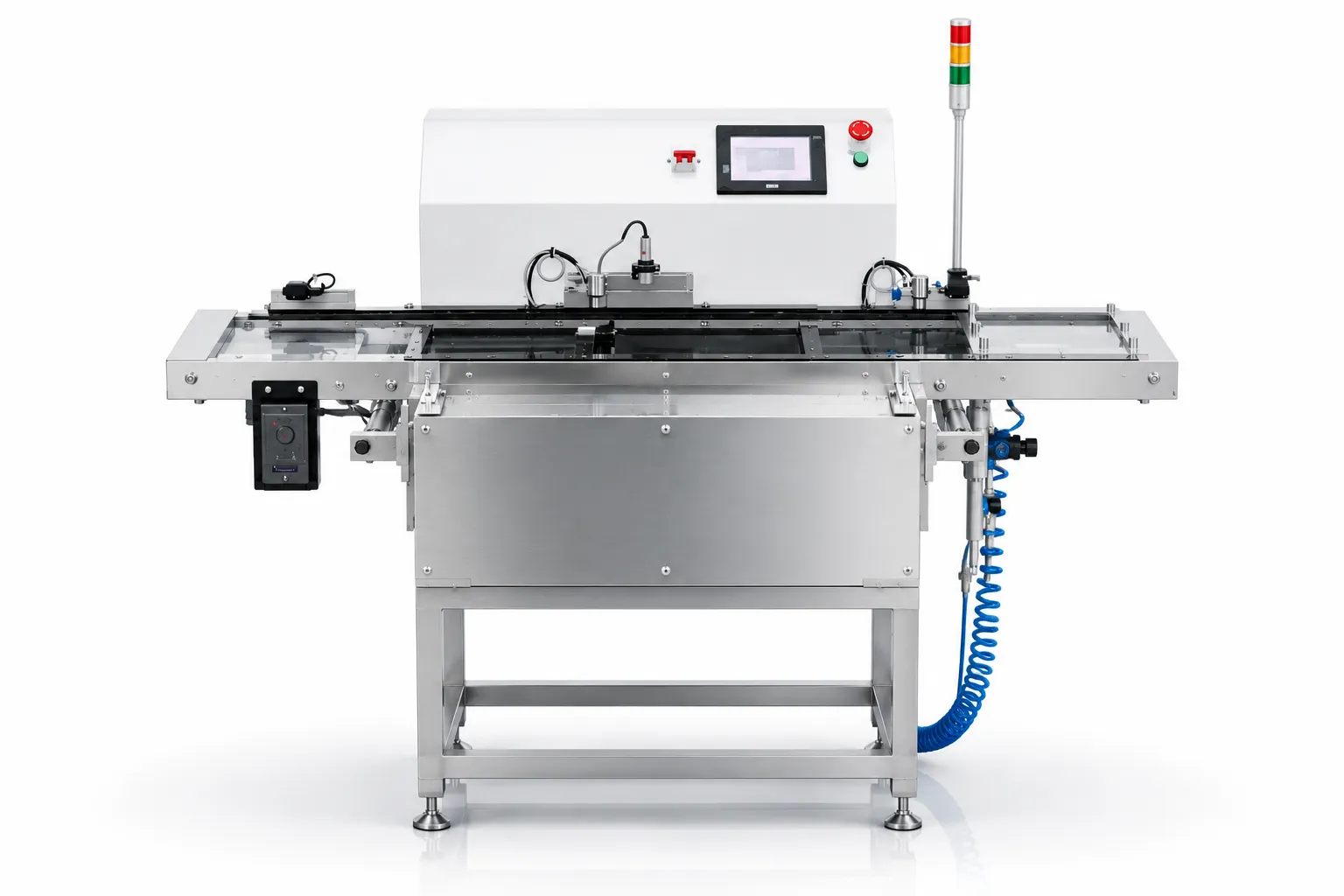
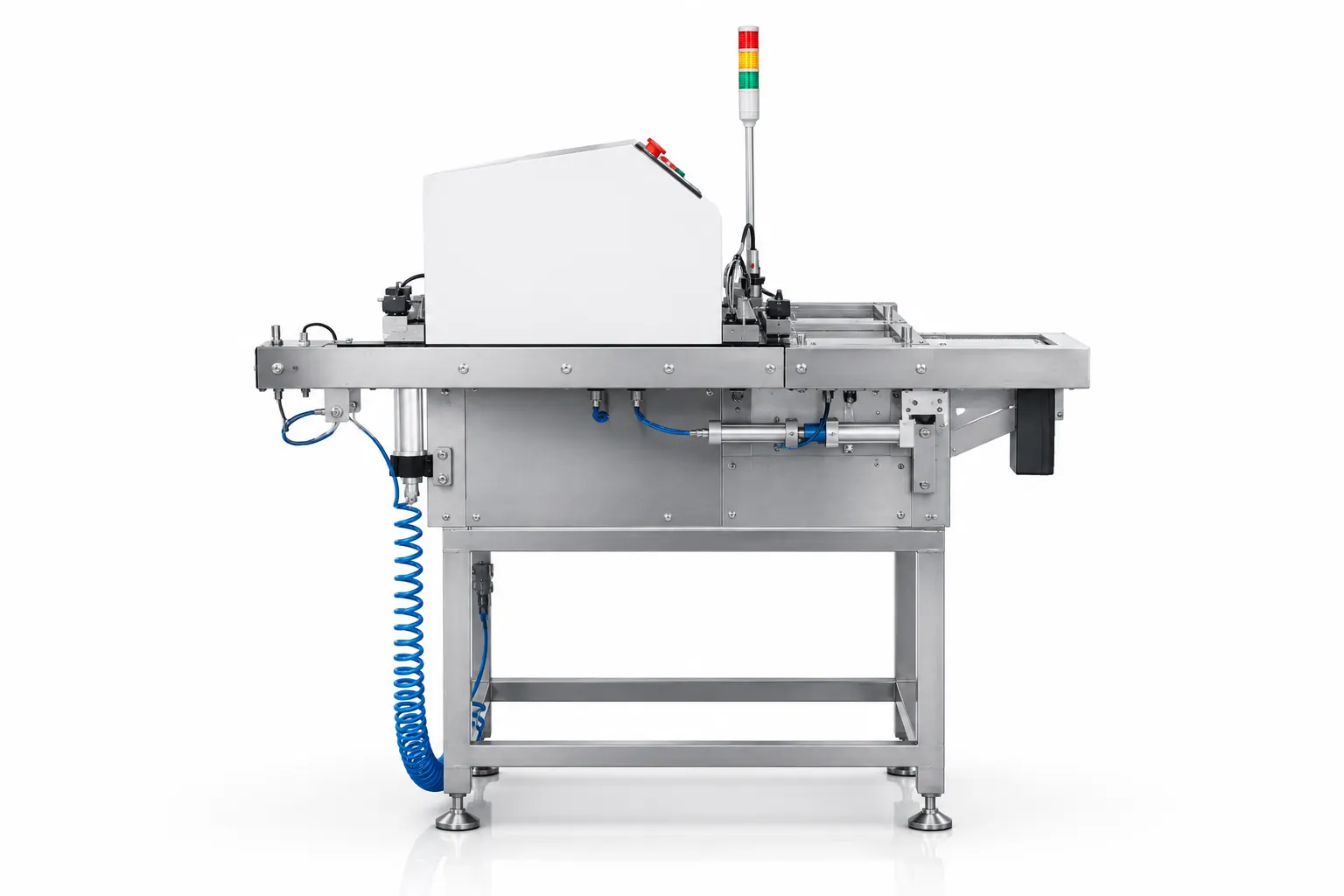
Inline PCB Flux Spraying Machine
The Inline PCB Flux Spraying Machine is an automated system designed to apply flux to PCBs before they proceed to the soldering stage, particularly in wave soldering and selective soldering production lines. The machine uses a conveyor system to transport PCBs into the spraying area, where a precision spray head and coordinate-based motion control system distribute flux according to predefined parameters and target areas. Compared with manual flux application, the automated system provides more precise control over the spraying position, flux volume, and application consistency from one PCB to another. For high-volume production environments, the Inline Flux Spraying Machine can be directly integrated with upstream and downstream equipment, minimizing manual intervention and maintaining a continuous, streamlined production flow.
VIETNAM CNC & TECHNOLOGY APPLICATION JOINT STOCK COMPANY
Hotline: +84.916 63 9355 / +84.915 74 4664
Email: Sales01@cncvina.com.vn / Sales03@cncvina.com.vn
Product description

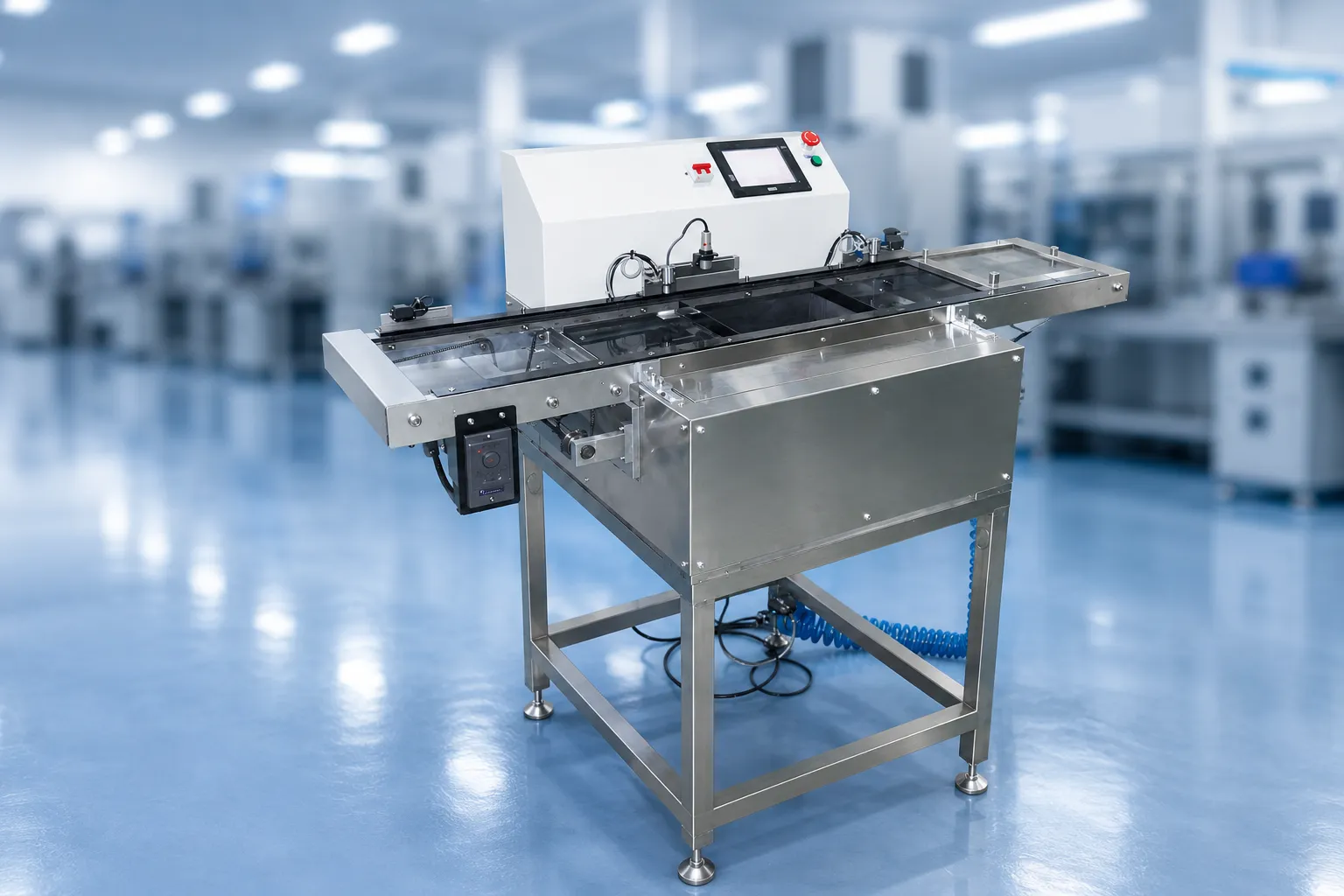
During the PCB assembly process, flux is used to facilitate soldering by removing oxide layers from metal surfaces and improving the wettability of the soldering materials. Therefore, precise control of the flux application rate has a direct impact on the stability and quality of the soldering process. An automatic flux spraying machine performs this task by transporting the PCB through the spraying area and applying flux to the designated regions according to predefined process parameters. Depending on the production line configuration, the machine can spray flux at specific points, along designated paths, or according to the contour of the target area.
For an Inline-type machine, PCBs are automatically loaded and discharged through an integrated conveyor system, allowing the equipment to operate seamlessly with upstream and downstream processes without requiring operators to manually load and unload the boards. This inline configuration helps minimize manual handling, improve production efficiency, and maintain a continuous and stable manufacturing flow.
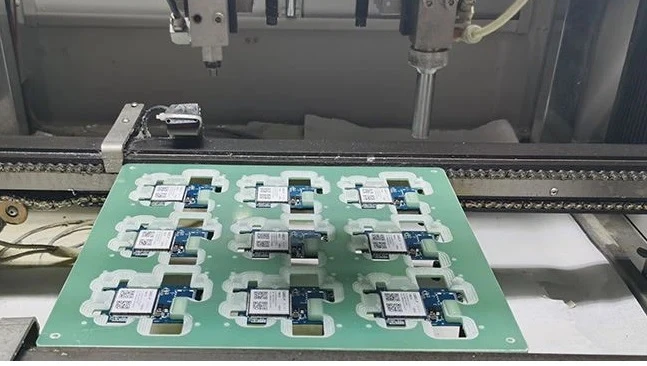
Operating Principle of the Inline PCB Flux Spraying Machine
Step 1: PCB Loading
The PCB is automatically transferred into the machine through the conveyor system. When the board reaches the designated position, the control system receives the corresponding signal and initiates the spraying cycle according to the pre-programmed parameters.
Step 2: Defining the Spraying Area
The operator sets the spraying coordinates and target area through the HMI control interface. Depending on the machine configuration, spraying positions can be programmed using a point-teaching function, allowing operators to directly define specific spraying points or paths within the program.
Step 3: Flux Spraying
The spray head moves along the programmed coordinates and applies flux to the designated areas. The motion system is driven by precision-controlled motors, enabling the spray head to maintain a stable and accurate trajectory throughout the operation.
For CNC VINA's machine design, the spraying process is optimized to concentrate flux application on the bottom side of the PCB, making it suitable for applications where boards are prepared for subsequent soldering processes. Precise control of the spraying direction and target area helps minimize flux mist and prevent liquid from spreading to unwanted areas.
Step 4: Collection of Excess Flux
An extraction system is used to collect flux mist and excess liquid generated within the spraying area. This helps maintain a cleaner working environment and minimizes the dispersion of flux outside the designated spraying zone.
Step 5: PCB Transfer to the Next Process
Once the spraying cycle is completed, the PCB continues moving along the conveyor to the next stage of the production line, such as the preheating and soldering process. The entire operation is performed automatically according to the programmed parameters, reducing manual intervention and ensuring greater process consistency across products.
Technical Specifications of the Inline PCB Flux Spraying Machine
| Specification | Parameter |
|---|---|
| Machine Dimensions | L1800 × W850 × H1200 mm |
| Power Supply | 1 Phase / 220V – 50Hz |
| Air Supply Pressure | 0.4 – 0.6 MPa |
| Conveyor Speed | 200 mm/s |
| Flux Spray Head Speed | 250 mm/s |
| Tank Capacity | 10 L flux tank, 1 L cleaning tank |
| PCB Transfer Height | 110 ± 20 mm |
| Conveyor Width | 50–450 mm, adjustable |
Key Features of CNC VINA's Flux Spraying Technology
Depending on the PCB design, flux type, and production line requirements, the machine configuration can be customized and adjusted to meet specific application needs. CNC VINA's Inline PCB Flux Spraying Machine is designed with a strong focus on precise spraying area control, efficient material consumption, and seamless integration into automated production lines.
The system helps manufacturers achieve stable and consistent flux application while minimizing material waste and reducing manual intervention. With its inline configuration and programmable spraying system, the machine can be integrated with upstream and downstream equipment to support a continuous and efficient PCB assembly process.
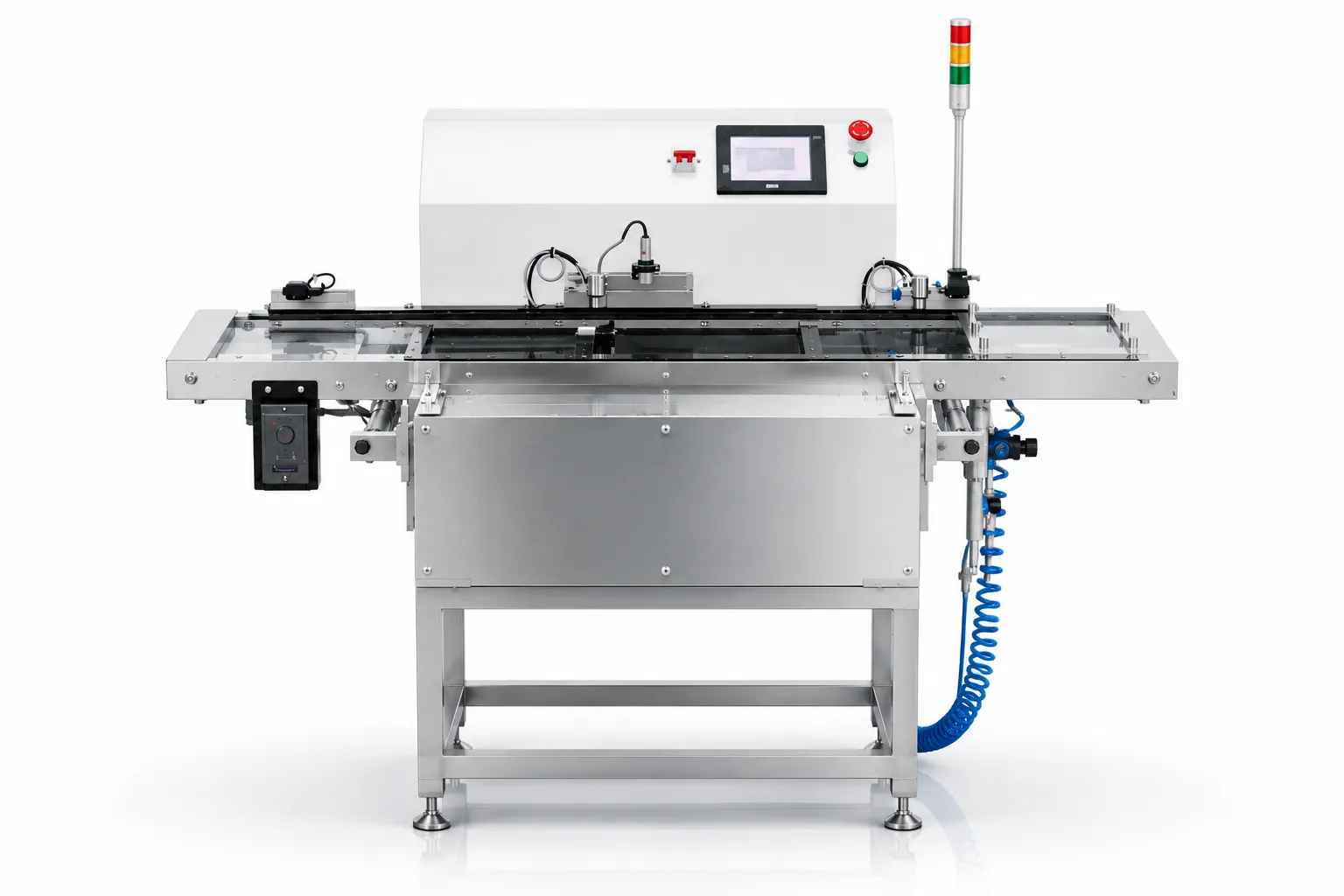
Targeted Spraying to Minimize Impact on Unprocessed Areas
One of the key factors in flux spraying is precise control of the spraying area. If flux is dispersed over an unnecessarily wide area, it can not only increase material consumption but also increase the amount of residue that needs to be cleaned from the machine and production environment. CNC VINA's machine is designed with the spray head positioned at an optimized distance from the PCB, combined with an extraction system to control flux mist and excess liquid. This configuration helps concentrate the flux more effectively on the designated processing area while minimizing unnecessary dispersion.
Programmable Flux Volume Control
The amount of flux applied should not be adjusted arbitrarily, but rather optimized according to the flux type, PCB design, and requirements of the subsequent soldering process. The automatic spraying system allows operators to configure spraying programs and control the process based on predefined parameters. Consistent control of the flux volume helps prevent two common issues: insufficient flux, which may negatively affect soldering performance, and excessive flux, which increases material consumption and leaves more flux residue on the PCB.
Support for Multiple Spraying Paths
The spray head's motion system allows coordinates and spraying paths to be programmed according to the required processing profile. This enables the machine to accommodate a wide range of PCB designs rather than being limited to a fixed spraying area. When changing product models, operators can simply select or configure the corresponding spraying program through the control system, helping streamline product changeovers and improve production flexibility.
Reduced Material Consumption
Automated flux spraying with precise control of both the spraying area and application volume helps minimize material consumption compared with manual spraying or uncontrolled spraying methods. Depending on the machine configuration and actual application conditions, the machine's targeted spraying design can significantly reduce flux consumption. Actual savings should be evaluated based on factors such as flux type, PCB dimensions, spraying area, and operating parameters.
Direct Integration into Production Lines
Designed in an Inline configuration, the machine can be directly connected to conveyor systems and other equipment within the PCB production line. The adjustable conveyor width within the machine's designed range allows the system to accommodate different PCB sizes. During actual implementation, the interface configuration and PCB transfer height can also be customized according to the requirements of the production line.
Intuitive HMI Control
The HMI provides operators with an intuitive interface for monitoring machine status and configuring spraying programs. The system also provides alarms when faults or abnormal operating conditions are detected, helping operators identify and resolve issues more quickly.
Key Benefits of Flux Application on PCB Surfaces
Automation of the Flux Spraying Process
With manual spraying methods, the amount and location of flux applied can vary depending on the operator's technique. As production volume increases, such variations may affect the stability of the subsequent soldering process. The Inline Automatic Flux Spraying Machine automates the entire process, from transferring the PCB into the processing area and determining the spraying position to applying flux according to the programmed parameters. Once the spraying cycle is completed, the PCB is automatically transferred to the next process through the conveyor system. This automation reduces repetitive manual operations while providing a more stable and highly repeatable process. It is particularly beneficial for continuous production lines and high-volume PCB manufacturing environments.
Precise Control of Flux Position and Volume
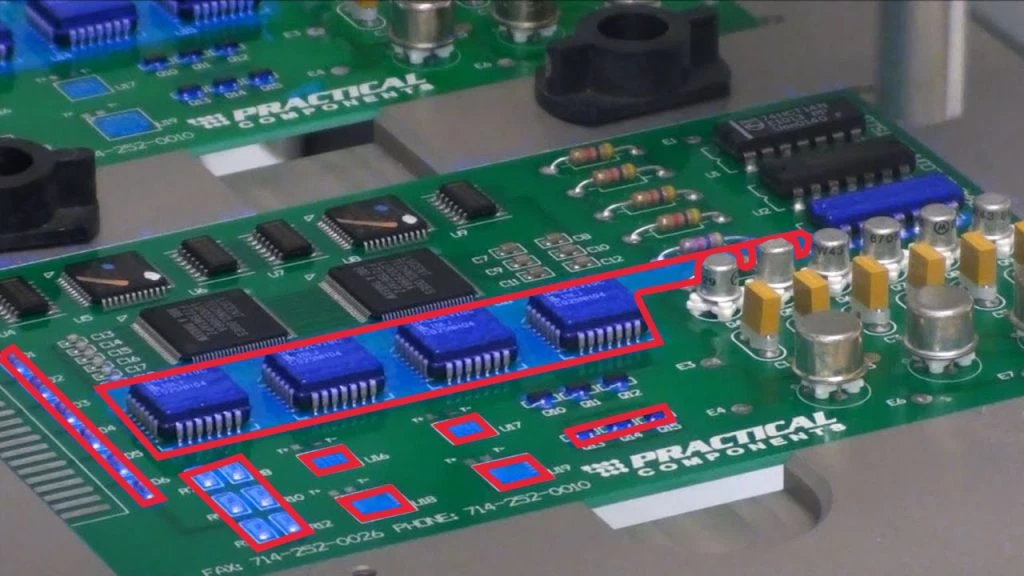
The amount of flux applied has a direct impact on the soldering process. If insufficient flux is applied, its ability to remove surface oxides and improve solder wettability may be inadequate. Conversely, excessive flux application can increase post-soldering residue, result in material waste, and increase equipment cleaning requirements. The automatic spraying machine allows the spraying position, trajectory, and application parameters to be configured for different PCB models. The spray head moves according to programmed coordinates, directing flux precisely to the designated areas rather than dispersing it across the entire PCB surface.
This enables more consistent flux application and improved process repeatability across PCBs of the same model.
Reduced Flux Consumption and Excessive Spraying
One of the key advantages of controlled spraying is the ability to apply flux precisely where it is required. Instead of using excessive amounts of liquid to ensure coverage across an entire surface, as may occur with certain uncontrolled spraying methods, the system can define an appropriate spraying area and trajectory based on the PCB design.
CNC VINA's machine uses a spray head positioned at an optimized spraying distance and incorporates an extraction system within the spraying area to minimize the dispersion of flux mist. This not only improves material utilization but also helps keep the inside of the machine cleaner by reducing flux accumulation on components and areas that do not require treatment.
Actual flux consumption depends on factors such as flux type, viscosity, PCB dimensions, target spraying area, and configured process parameters. Therefore, the actual savings should be evaluated based on specific production conditions rather than applying a fixed percentage to all products.
Improved Soldering Process Stability
Flux is not simply a liquid applied to the PCB surface; it is an essential part of the surface preparation process prior to soldering. Flux helps remove or minimize the effects of oxide layers on metal surfaces and improves the wettability of the soldering material. When the flux volume and spraying position are maintained consistently, the input conditions for the subsequent soldering process can also be controlled more effectively. This helps reduce variation between PCBs and supports the formation of stable solder joints. However, the final soldering performance also depends on factors such as flux type, preheating temperature, thermal exposure time, and the parameters of the downstream soldering process.
Reduced Processing Time and Increased Productivity
With an Inline conveyor system, PCBs are automatically transferred into the spraying area and then moved to the next process according to the programmed cycle. Operators are no longer required to manually load each PCB, align its position, and perform the spraying operation individually.
When synchronized with the overall production line speed, the machine can maintain a stable processing cycle and minimize the risk of the flux spraying process becoming a production bottleneck. This is particularly beneficial for manufacturers that need to maintain high production volumes over extended operating periods.
Easy Program Changeover for Multiple PCB Models
In actual production environments, manufacturers may need to process multiple PCB models with different dimensions and spraying areas. With manual spraying, product changeovers depend heavily on operator experience and may result in inconsistencies. With the HMI control system and point-teaching function, manufacturers can configure different spraying programs for individual PCB models. When switching to a new product model, the operator can select the corresponding program and adjust the required parameters as needed. This improves production flexibility and makes the system well suited to multi-product manufacturing environments.
Direct Integration with Production Lines
The Inline design allows the flux spraying machine to connect directly with other equipment through the conveyor system rather than operating as a standalone unit. PCBs can be continuously transferred from the preceding process into the flux spraying machine and then proceed directly to the downstream soldering process. When integrating the machine into a production line, parameters such as PCB transfer height, conveyor width, conveying speed, and communication signals between equipment need to be properly synchronized. A machine with flexible configuration capabilities can simplify the integration process and minimize the need for modifications to existing equipment.
Improved Operating Conditions and Maintenance
The flux spraying process may generate mist or excess liquid that can accumulate within the working area. If not properly controlled, flux residue may build up on internal machine components, potentially affecting equipment performance and increasing maintenance requirements.
The extraction and collection system installed in the spraying area helps control excess flux and minimize its dispersion within the machine. In addition, automated operation and an accessible design for key material supply and spray head components make routine cleaning and maintenance more convenient.
Regular cleaning should still be performed according to the type of flux being used and the manufacturer's technical guidelines to ensure stable and reliable equipment operation.
Reduced Dependence on Manual Labor
An automated flux spraying machine does more than simply replace the manual spraying operation. It also shifts the operator's role from directly performing the process to monitoring and controlling the system.
Operators can focus on monitoring machine status, inspecting PCBs, replenishing materials, and responding to alarms when necessary. This reduces dependence on individual manual skills while making it easier to standardize the process across different production shifts.
When integrated with other automated equipment in an SMT or PCB soldering production line, the flux spraying machine becomes an important link in a more highly automated manufacturing process.
Applications of the PCB Flux Spraying Machine
The PCB Flux Spraying Machine is widely used in PCB manufacturing and assembly lines where flux is required as part of the soldering process. The equipment is suitable for a wide range of electronic manufacturing applications, including electronic components and devices, control boards, industrial electrical and electronic equipment, automation systems, automotive electronics, home appliances, and consumer electronics.
The machine is particularly effective in production lines that require high-volume PCB processing, consistent flux application, and continuous integration with downstream soldering processes. In production lines utilizing wave soldering or other soldering methods that require flux application prior to soldering, the machine can perform precise flux distribution according to predefined spraying areas and programmed parameters.
Instead of manually spraying the entire PCB surface or relying on operator-controlled application, the automated system concentrates flux on the designated processing areas, minimizing excess material and maintaining consistent application across PCBs.
Depending on the specific product and production requirements, the machine configuration should be selected based on factors such as PCB dimensions and design, flux type, target spraying area, required production volume, and the characteristics of the downstream soldering equipment. Evaluating these factors together helps ensure that the flux spraying machine operates reliably and remains properly synchronized with the overall production line.
CNC VINA's Automatic PCB Flux Spraying Machine is designed for integration into modern industrial production lines, providing a practical solution for automated and consistent flux application. With its precision spraying technology, the machine offers key advantages including process automation, increased productivity, improved process consistency, and optimized material consumption. The controlled application of flux helps prepare the PCB surface for subsequent soldering operations and supports stable solder joint formation.
For manufacturers looking to optimize their PCB production processes, CNC VINA's flux spraying solution can be integrated into various electronic manufacturing lines and customized according to specific production requirements.
Automatic machines for the electronics, machinery and industrial equipment manufacturing industry:
· Rosin spraying and tin dipping machine
· Automatic glue dispenser and UV irradiator in electronics production
· Semi-automatic glue dispenser and applicator
· Circuit board cutting machine
· Speaker membrane pressing machine
If you need to contact us to survey and develop an automatic machine design plan, please contact:
VIETNAM CNC & TECHNOLOGY APPLICATION JOINT STOCK COMPANY
Factory: Song Cung Industrial Site, Dong Thap Commune, Dan Phuong District, City. Hanoi Vietnam
Northern Office: Rox Center Ho Tung Mau Building (Rox Tower Goldmark City), 136 Ho Tung Mau Street, Bac Tu Liem District, Hanoi.
Southern Office: Lot H9, Tran Quoc Toan Street, Phu Chanh Ward, Thu Dau Mot City, Binh Duong.
Phone: +84.9166 393 55/ +84.915 74 4 664
Website: https://cncvina.com.vn; https://cncvina.net; https://cncviname.com.vn
Email: Sales01@cncvina.com.vn | Sales03@cncvina.com.vn


